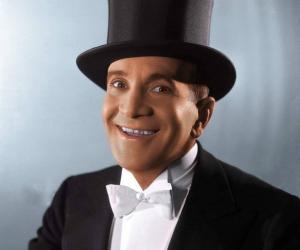
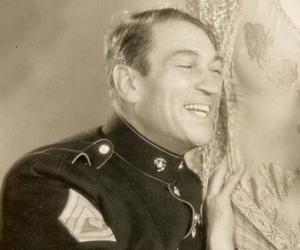
Singer, comedian, and actor Al Jolson was dubbed "The World's Greatest Entertainer" at the peak of his career. Known for his brash and extroverted performances, he is credited to have played a major role in defining the modern musical. He was the first star to entertain troops overseas during World War II and was posthumously awarded the Medal for Merit.
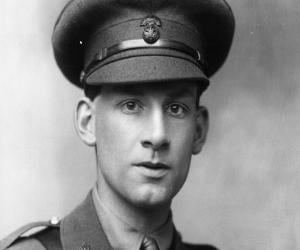
Siegfried Sassoon was an English writer, poet, and soldier. One of the most popular poets during the First World War, Sassoon's works satirized the patriotic pretensions of those accountable for the war as well as described the horrors of the war. Siegfried Sassoon's works and ideology greatly influenced another leading poet of the First World War, Wilfred Owen.
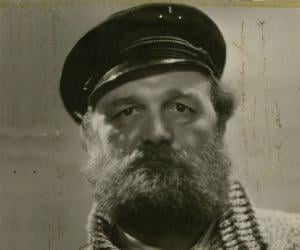
Known for his collaborations with director John Ford, actor Victor McLaglen was a favorite of audiences of Westerns and even bagged an Oscar for his performance as Gypo Nolan in The Informer. Earlier, he was a carnival boxer and would often use the nickname Sharkey for his bouts.
Ludwig Mies van der Rohe was a German-American architect. He is widely considered one of the many pioneers of modernist architecture. After emigrating to the United States, Mies worked on structures like the Promontory Apartments. He is best remembered for serving as the director of a popular German art school named the Bauhaus before its closure in 1933.
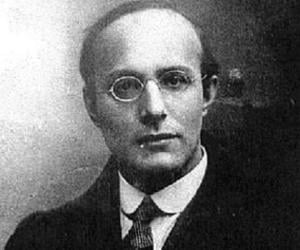
German-American theologian and philosopher Paul Tillich is remembered for his work in the field of Christian existentialism and for concepts such as the method of correlation. His notable works, such as The Courage to Be and the three-volume Systematic Theology, has inspired intellectual thinkers and commoners alike.
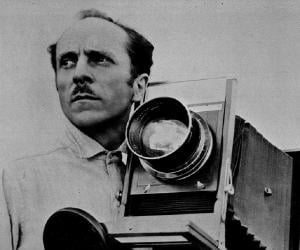
Edward Weston was an American photographer and archer. Regarded as one of the most influential and innovative American photographers of all time, Weston became the first photographer to be honored with a Guggenheim Fellowship in 1937. Some of his photographs, such as Nude, 1925 and Nautilus, are among the most expensive photographs ever sold.
Author, poet and dramatist Hugo Ball was also a harsh social critic and a staunch pacifist. Known for his works like Critique of German Intelligence and The Flight from Time, he left Germany during WWI to settle down in neutral Switzerland, eventually becoming famous as the founder of the Dada movement and a pioneer in the development of sound poetry.
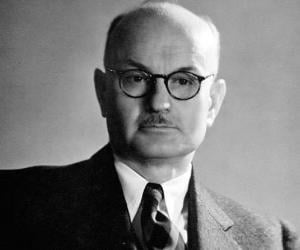
Jean Arp was born in Strasbourg, to a German father and a French mother. After studying art in Paris and Switzerland, he co-created The Modern Alliance and participated in the Dada and Abstraction-Création movements. An avant-garde painter and sculptor, he also experimented with media such as embroidery.
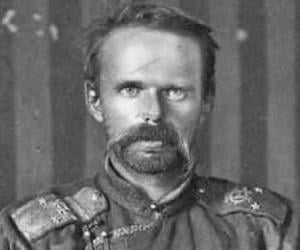
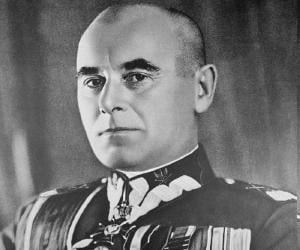
Edward Rydz-Śmigły was a Polish statesman, politician, poet, Marshal of Poland, painter, and supreme commander of Poland's armed forces. He was a much admired and respected public figure in Poland during the interwar period and was widely regarded as a national hero for his service as an army commander during World War I and the Polish–Soviet War.
Austrian artist, playwright, poet and teacher Oskar Kokoschka CBE is counted among the prominent exponents of Expressionism whose works influenced the Viennese Expressionist movement. Notable works of Kokoschka include paintings like The Bride of the Wind and Portrait of Lotte Franzos and writings like the short play Murderer, the Hope of Women and the play Orpheus und Eurydike.
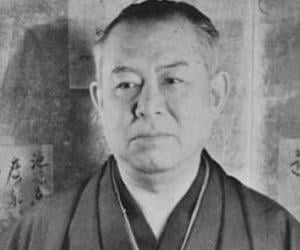
Tanizaki Jun'ichirō was a Japanese author whose works made him a contender for the Nobel Prize in Literature in 1964. Widely regarded as one of the most important personalities in modern Japanese literature, Tanizaki's work ranges from the depictions of erotic obsessions to the dynamics of family life in 20th-century Japan. Many of his works have been adapted into films.
Nobel Prize-winning ethologist Karl von Frisch is best remembered for his research on communication among bees. He was the first to observe that bees communicate the location of food to other bees by a form of “dance.” He penned down his studies in books such as The Dancing Bees.
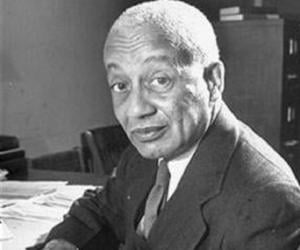
Apart from being a political economist, Karl Polanyi was also a prominent Hungarian political leader. The Great Transformation remains his best-known work. He taught at institutes such as the Columbia University and is known for proposing the idea of a cultural version of economics known as substantivism.
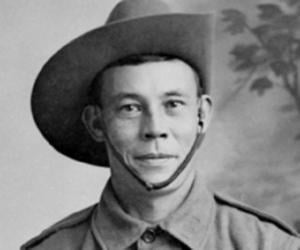
Billy Sing was an Australian soldier who served during the First World War in the Australian Imperial Force. He is best remembered for his role in the Gallipoli Campaign where he was a sniper. Billy Sing is credited with pulling off at least 150 confirmed kills while contemporary evidence suggests that he may have had close to 300 kills overall.
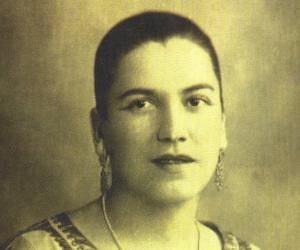
Born to affluent coffee farmers in Brazil, Tarsila do Amaral later traveled to Spain and Paris, to study painting. Best remembered for her masterpieces such as The Black Woman and Man Who Eats, Tarsila also painted surrealist and semi-Cubist landscapes. She was a pioneer of the Antropofagia movement.
Alfonso XIII began ruling as the king of Spain under the regency of his mother, María Cristina. His strategy of rotating governments led to 33 governments in 21 years. Known as El Africano for his support to those who wished to colonialize African countries, he eventually had to leave Spain.
Russian baron Roman von Ungern-Sternberg gained fame as an anticommunist general during the Russian Civil War. Also known as the Mad Baron for his cruelty toward his enemies, he had converted to Buddhism but retained strains of Christianity in his faith. He was eventually executed by a firing squad.
Mary Wigman was a German dancer best remembered for pioneering dance therapy and expressionist dance. Also a choreographer, Wigman is also credited with pioneering movement training sans pointe shoes. Widely regarded as one of the most prominent personalities in modern dance history, Mary Wigman is also considered an iconic figure of Weimar German culture.
Though a qualified civil engineer from MIT, Hugh Lofting is best remembered for writing the Dr. Dolittle series of children’s classics, which created a cult character and also inspired several movies. His only work for adults was the war poem Victory for the Slain, which depicted the futility of war.