
Total Playtime: The Coriander Of Space Marines
Taste explosions
Total Playtime is now the official Jank podcast, and is produced thanks to the support of our paying subscribers (and formerly our backers on Patreon). This week’s episode is free, but subscribers get additional episodes every other week. You may join them by subscribing here, and you can find all previous episodes here.
It’s a free-to-all episode this week, so Alice, Nate and myself turned ourselves to the major issues of the day: Xboxes are really expensive, how a Skyrim username error can get you wrongly imprisoned for soliciting minors, a new Thimbleweed Park and a very detailed explanation of how good the Space Marine x Helldivers 2 partnership is.
Join us for a detailed overview of the Astra Militarum, a half-remembered summary of the Xbox P&L and a fleeting cameo from Alice’s dog. Plus: children who chew on cigars from birth, engaging worm protocol, and clown husbandry.
Our music is by God Ribbon, our art is by Marsh Davies and this week our editing is by Dave of the Sonic The Comic podcast who did a banger job even with limited guidance. Thanks to backers of Jank (formerly

Emuurom review
Wanna get lost?
At its best, Emuurom leads you to make new discoveries several times per minute. You are exploring a world, screen-by-screen, with nothing but a scanner you can point at the flora and fauna. Scan a cloud? It rains. The rain falls on a flower? It blooms. Scan a bird? It flies left to right. Scan a different bird? It shrieks. The shriek touches a flower? It splits into seeds. What do the seeds do? You'll discover that soon enough, with a little playful experimentation, and then discover another thing and another thing. Playing Emuurom is like being parachuted into the middle of Moominland without Tove Jansson's prose to guide you and so each new creature and interaction is yours to piece together.
That's Emuurom's surface layer, and it's a joy. It's where I live. Many people will try to convince you that this puzzle-platformer's greatness lies in the cleverness beneath that surface, however. Its developer has spent eight years constructing layer upon layer of secrets which reveal themselves only via perseverance and effort. Emuurom contains, for example, a unique language to translate. That's the kind of worldbuilding that makes a certain kind of person immediately excited, and it's a transparently impressive act of design. For me, a dummy, such depths are both admirable and off-putting, and so I am here to tell you that Emuurom is something much more than clever. It's fun.
Jumping on things and scanning them are the only modes of interaction here. Emuurom has no combat and your character, sent to this planet like a data upload, has no health bar and cannot die. Instead, the creatures that populate this planet either passively let you shove them around, move along fixed paths, or shove you back when prompted. One area has dolphin-like creatures that leap out of the water when you scan them, for example, so you scan them when they're beneath you and they shove you to a platform that's higher than you can jump.
I'm giving away that discovery for free because Emuurom is full of them, and you will intuit much of what you must do to progress without much conscious thought. The trick is to just keep scanning everything, old or new, and to trust that the game will reveal itself to you, at least until you reach its endgame. These reveals are delivered in part via written descriptions of the creatures and plants you encounter, each of which have names, behaviours, and occasionally short snippets of dialogue. They build up a picture of a world that is playfully alien and silly, when the pixels and puzzles might otherwise have been austere.
This post is for subscribers only
Already have an account? Sign in.

The spirit of tower defence Flash games is alive in the 120,000 orcs I just killed
It's not easy being green paste on the floor
Hello to all fans of watching sand hypnotically pass through the bottleneck of an hourglass, I come to you with a gift. Sir, We Have An Orc Problem is a snacky kill 'em all about fending off a flood of little green murderers with lasers, flamethrowers, and cannons. There are so many of the wee freaks that they move like the particles of a physics-based fluid. It is pleasing to look at even before you find the choke points of each level and blast each small pillager into bloodbits with a mortar barrage.
It's cheap, it's chewable, and it reminds me, in the best possible way, of a compulsive Flash game that would have swept over every PC in my secondary school like a greasy, green plague of wicked idleness. Please, look at these runny GIFs and tell me you are not intrigued.
It is classic tower defence in many ways. You place turrets 'n' Tesla coils and try to stem the flow of attackers before they cross a threshold and slurp up all your health. You get extra abilities to help out in a pinch. You can call in an airplane strafing run. You

The first Witcher book is great, which points to a larger problem
Rivia questions
Total Playtime is now the official Jank podcast, hosted by Alice Bell, Jon Hicks, Brendan Caldwell and Nate Crowley. Text Adventure is our videogame book club, in which we read a videogame novelisation and try very hard to like it. Ahead of the imminent arrival of Season 2 of Text Adventure, we’re finishing up our summaries of the first season.
This article series has not matched the broadcast order because I wanted to end here, with Andrzej Sapkoski's The Witcher: The Last Wish: a collection of short stories that is more-or-less (the publishing order is somewhat haphazard) the first time that anybody encountered roving monster slayer Geralt of Rivia. It is by some distance the best book we read, and unfortunately I must assume that is because it was written as standalone prose rather than something that was backed out of a game world.
This post is for paying subscribers only
Already have an account? Sign in.

Microsoft has always been PC gaming’s greatest obstacle
Ages of empire
In the wake of Microsoft’s latest decision to lay off, kick out, and otherwise terrorise its stable of game developers, onlookers were understandably outraged. If you've been a PC gamer for the past twenty years, there was probably a secondary feeling: one of familiarity.
If you predominantly play on PC, Microsoft has always been a force that destroys your favourite developers and makes the experience of playing your favourite games worse. You don't even have an era of BMX helmets and neon green consoles to look back fondly upon; instead your memory is filled with Games For Windows Live error messages and all the other studios Microsoft cut down.
This post is for paying subscribers only
Already have an account? Sign in.

The Lie-In
Links worth clicking
Good morning, videogames. I am still, somehow, on holiday, but once again I have prepared an article for you to read in advance. How have I collected a collection of articles worth reading this week when I haven't been at my desk? Well, no one ever said all the articles had to be new.
Many remember Kieron Gillen's New Games Journalism manifesto. No one remembers what I'd consider its sibling, written months earlier by then-PC Gamer editor Mark Donald. Donald had just redesigned the UK version of the magazine to focus more on games post-release and to support the kind of in-game cultural reporting Gillen later referenced, and he posted an open letter looking for contributions. It's more of a pragmatic appeal for pitches than Kieron's call to arms, but I think it's nevertheless an inspiring mission statement. It was what prompted me to pitch to PC Gamer the following year, after which Mark handed me my first paid commission and, a few months later, a full-time job.
I'm trying to create a magazine that communicates the incredible experiences gamers have. A magazine that reports on the amazing transformations

Jank Mail: Summer sums
This week in PC gaming
Another week has passed in glorious Jank, which means that (thanks to the generous backing of our supporters) we have survived six months and written, yikes, over 200 articles. Brendy summarised some highlights but really it's all good and we added still more this week, starting with Nic Rueben's delight at ZeroSpace’s shameless appropriation of both Starcraft and Mass Effect:
And yet, like, there is something here, flittering about the halls of its hilariously brazen necropolis of zombie inspirations like a moth caught in a packet of moth-flavoured crisps. Do I dare call that something soul?
He certainly can, it's our site and there is nobody to stop it. As further proof, for this month’s Living in Sim Brendy had a great time in a filthy astrology lab:
Eventually, I discover an asteroid, a planet, and a white dwarf. A few weaker signals dissolve before I can even readjust the satellites to look at them. My bosses are not impressed and they routinely pay me less than my daily wage because I have not fulfilled their exact orders in the emails. You are supposed to go outside and hike or bike

What you could play this weekend
Videogames' three art styles: pixel art, embroidery, and skeletons
As you read this, I am still on holiday where, baggage allowance permitting, I will be playing games on my Steam Deck. Which games, I have no idea. Thankfully I have prepared in advance and below you will find your usual collection of games you could be playing. Where would you be without me?
Tell us what you are playing in the comments below.
Scarlet Deer Inn
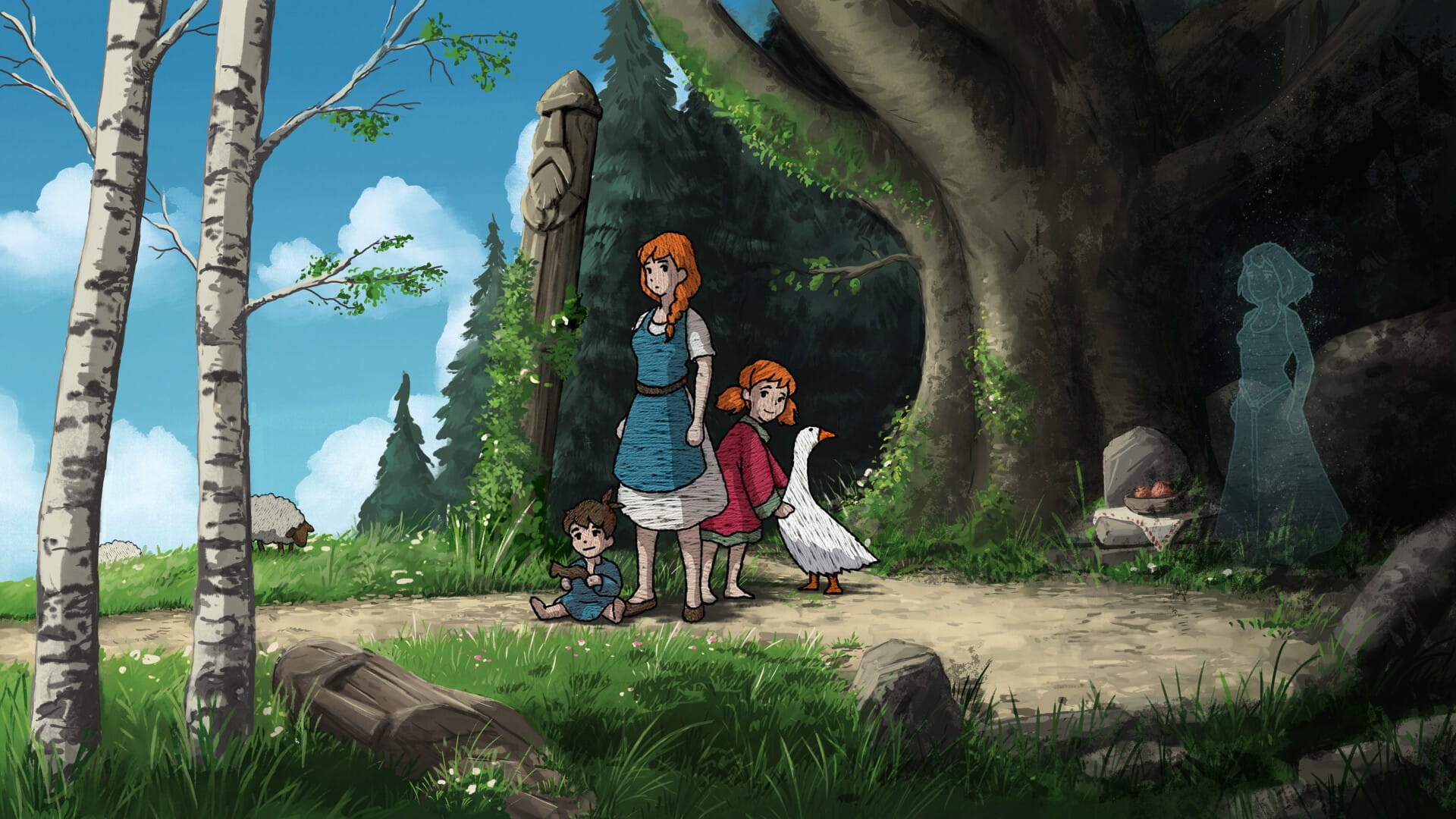
A side-scrolling medieval folk tale in which every frame of character animation was created via embroidery. I have no idea how this plays out in practice - Thank Goodness You're Here meets Pentiment? - but it looks beautiful and I'm keen to find out.
Hand Of Fate: Hordes
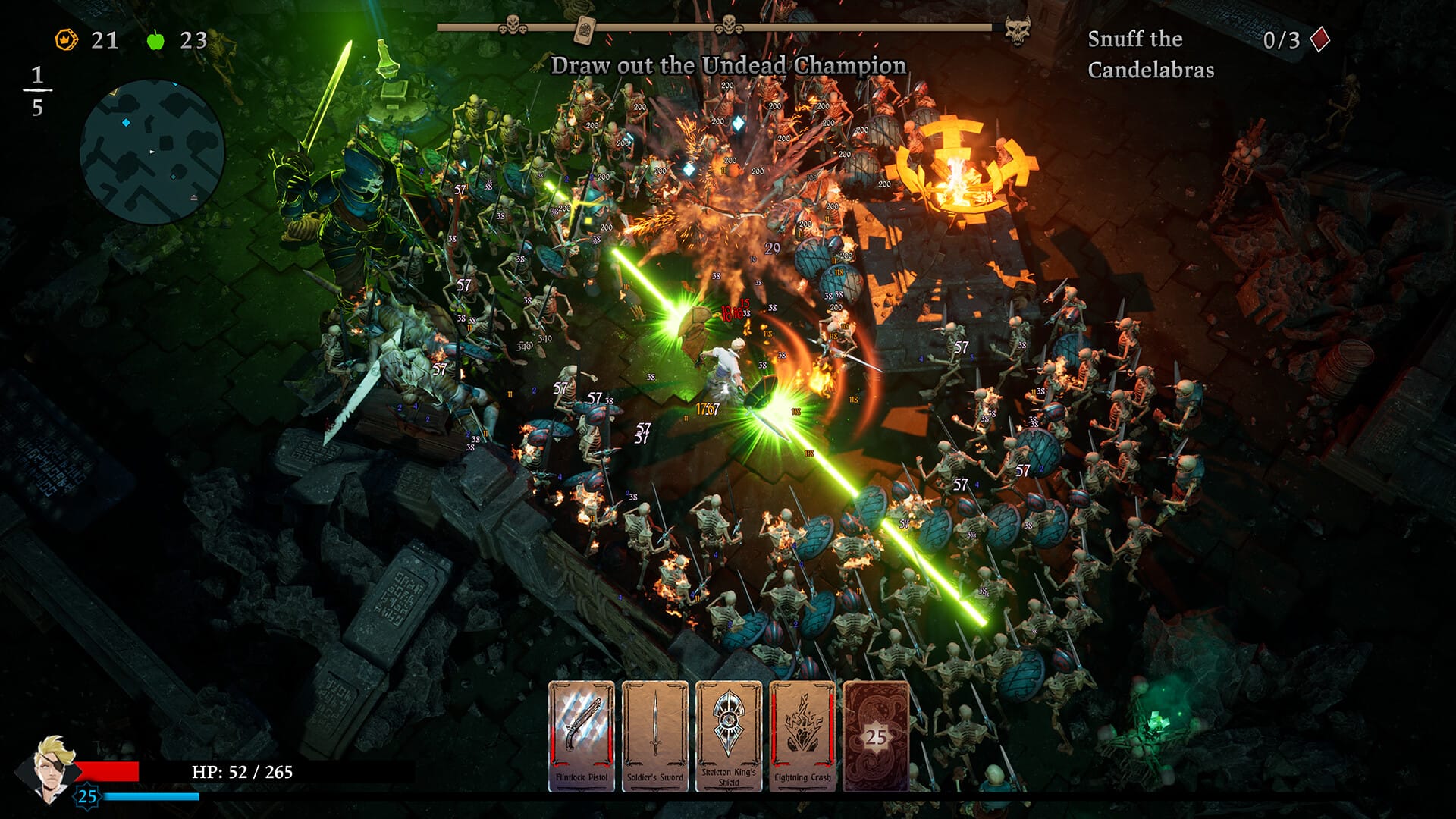
Hand Of Fate was a beloved tactical deckbuilder that seemingly didn't perform well enough to support its developers, who effectively closed down after Hand Of Fate 2. Now a bunch of former staff have re-formed under a new studio to bring some of the series' crunchy deckbuilding into a bullet hell context. It's out in Early Access now.
Offbeat
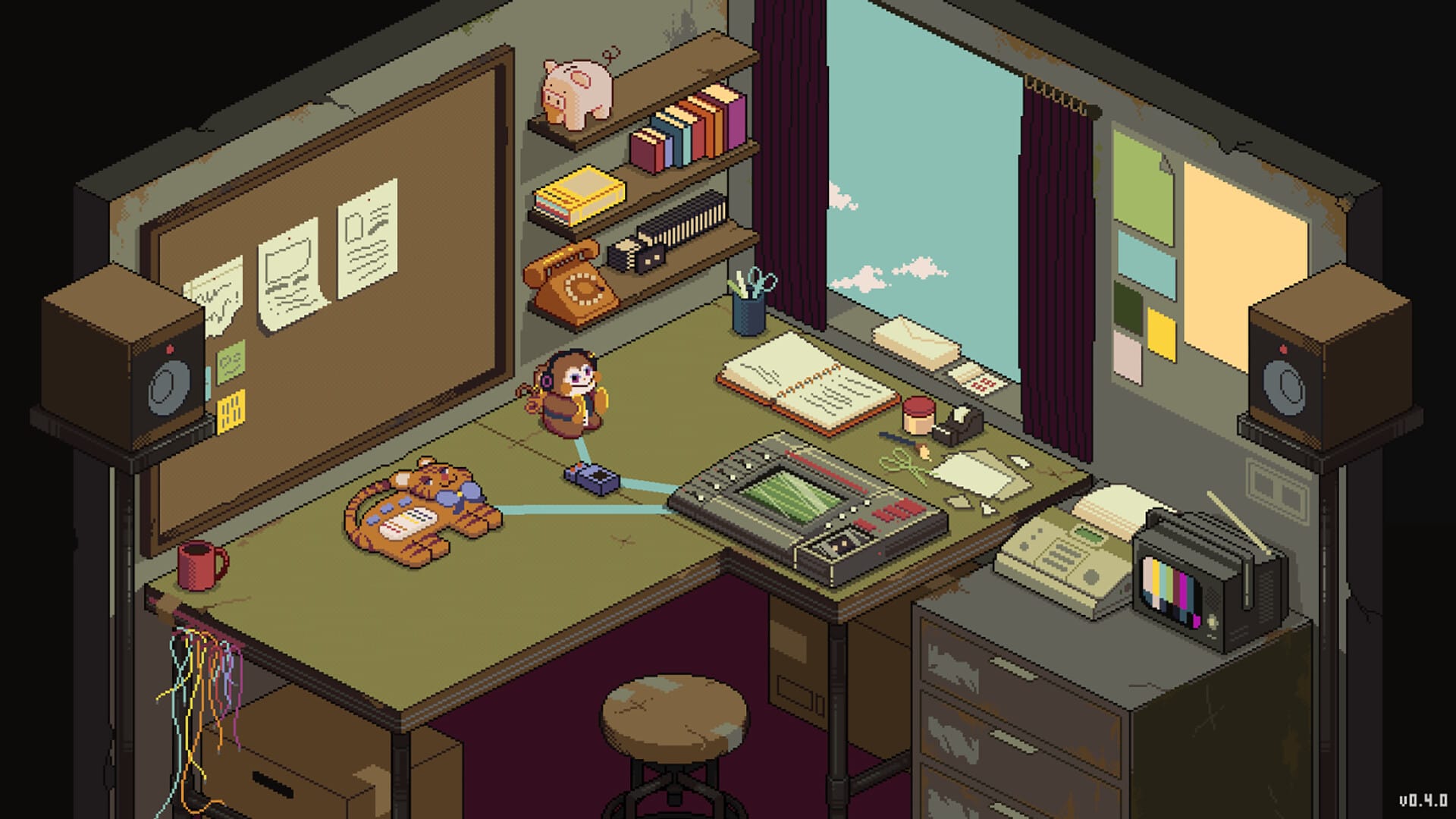
Music is better than videogames, so here's a management tycoon game in which you construct your own recording studio, collect musical
The homepage is over but you can signup for more
You like more, right?