Follow us and stay on top of everything CRO
Read summarized version with
Measured in visits or sessions, website traffic simply refers to the number of visitors a particular website receives. As it indicates both the organic popularity of a brand and the efficacy of its online marketing efforts, website traffic is a critical metric for any business. Therefore, driving quality website traffic will continue to remain a priority for business growth in the age of digital.
Measuring website traffic helps unlock a goldmine of insights about your visitors, therefore helping you figure out what works and what doesn’t to build a highly-engaging website that ultimately drives better conversions. It’s imperative to continually track and measure website traffic to:
Monitoring web traffic and mapping onsite behavior helps you get to know your visitors better. It provides you with demographic and behavioral information about your visitors that you can leverage to optimize your site for increased engagement and conversions.
If you’ve made any tweaks to your website, your traffic report will verify it’s success or failure. You can immediately see the effect of the changes made by their impact on your web traffic. If you observe that the traffic rises significantly, this can be translated as a surge in inquisitive visitors.
On the other hand, when the surge begins to fall, you might need to re-evaluate the changes you made. Though not every drop in traffic can be linked to an unsuccessful change, it is smart to keep a note of significant drops.
Besides evaluating current web performance and how customers are engaging with or perceiving your brand, website traffic also enables you to explore the market dynamics. It allows you to access potential locations and provides browser statistics, further helping you attract a larger customer base and expand your business’ reach.
Experienced and smart analysts are asking more important questions about website traffic. Now digital marketing experts are also concerned about factors like:
It’s obvious that the more time a visitor spends on a webpage, the more useful it is for the business. Bringing volumes of visitors to your website is meaningless if they only spend a few seconds on your web page and then leave.
With factors like time spent on page becoming a focus, terms like bounce rate and the on-page time came into the picture.
Bounce rate
To bounce from a website means to leave it before interacting with the site in any way, such as leaving a comment, downloading content or visiting another page on the site. Bounce rate shares information regarding an on-site visitor’s behavior, and also how well the website is engaging them.
On-page time
On-page time gives you an insight into how well your website content is actually performing. Time on page is defined as the average amount of time a user spends viewing a specific page or set of pages. Most analysts define this as the amount of time that a visitor spends reading the content on a single page. This particular value is basically calculated by dividing the total amount of time a visitor spends on your site or its page(s), by the total number of site visits they make in a session.
Conversion rate is a measure of how many users visiting your website are actually making a purchase or clicking a CTA for filling a contact form or downloading a content asset. The conversion rate depicts the success of an e-commerce site or any other website. It is a clear indicator of how effectively the website is able to sell your product or service.
Well, yes! The cost of bringing visitors to your website is very important. Though some of the web traffic is free, in the case of paid traffic diverting visitors to your website comes at a cost.
A session ideally records everything a user does on your website. For example, during a single session, a visitor might land on your site’s home page, then navigate their way through various pages, including the product pages, the pricing page, the blog page, and so on. All these interactions are counted as one user session. Sessions provide critical information around visitor habits and behavior as they navigate through your site’s funnel. You can use this information to optimize your website and improve the user experience. Use tools like VWO Session Recodings to view user behavior in real-time.
The average session duration measures the average time spent by a user on your website. A session usually begins when visitors land on one of your site’s pages and ends when they exit your website. Knowing how long a visitor stays on your site helps gauge their overall user experience. In some cases, a short session may indicate that a visitor couldn’t find the information they were looking for. Or maybe your site is too slow for them to wait around for it to load. Typically, an average session duration ranges between 2-3 minutes.
If your site’s pages load slowly, your users will leave immediately and will likely not return in the near future. Ideally, your site’s load speed should be under 2 seconds. Anything beyond that is a dangerous sign. The higher the load speed, the higher shall be the bounce rate.
The click-through rate is another essential website metric you should track. It’s the ratio of users who click on a particular link of your website to the total number of users who view a page, email, or advertisement of your site. The Click-through rate helps analyze how well your keywords and ads are performing on the internet.
Web traffic sources can be defined as the source through which people find your site. It helps keep a tab on which traffic sources are driving visitors to your website. Some common website traffic sources are defined as below:
The term “organic traffic” refers to the visitors that land on your website organically through search results. In other words, organic visitors find your website by entering specific keywords in search engines like Google, Bing, Yahoo, and more, and land directly on a site.
One of the easiest and most convenient ways to increase a website’s organic traffic is by publishing high-quality, relevant content regularly as blogs, case studies, white papers, and even video content. This is, however, only one of the strategies which you, as a business, can inculcate in your process to get the fence-sitters to walk into your online arena. Using other methods such as search engine optimizations must also make a part of your online traffic growing strategy.
Paid traffic, as the name suggests, as the traffic that’s acquired through paid promotions, either through Google Ads, social promotion, etc. Of the many paid activities that a business can do to acquire a heavy load of traffic is the Pay Per Click (PPC) model. This is typically done through Google Ad Words. Other known and commonly used types include banner advertisements, Pay Per Acquisition (PPA) advertising, Cost per Thousand (CPM) impressions.
Though most marketers suggest that paid activities must make for only a small portion of your traffic growth strategy, it, in fact, can have an extremely positive impact on your website (provided it’s carefully planned and executed). For a reason that paid promotions guarantee results. Unlike organic methods, paid activities, done through authoritative sites, ensure visitors pay a visit to your site and engage with its content. You can also use keyword optimization to target specific audience segments and lure them to your site.
Referral traffic refers to visitors that come to your site from sources outside of Google. When a visitor clicks on a hyperlink to go to a new page on a different website, google analytics track the click as a referral click to the second website.
The originating site is called a “referrer site” because it refers to traffic from one site to the next. Referral traffic is one of three statistics tracked by Google Analytics.
Referral traffic is important for your website because it directs possible buyers to your website from other sites that might have the same target group. Visitors trust recommendations of the other site already; hence they are comfortable getting redirected to your website.
Referral traffic also can take the form of tracking code placed on other websites, including banner ads such as AdWords, to include a referral code linked to a specific marketing campaign.
Marketing analysts can easily check the list of referrals and can better identify the interests of the customers coming from those sites. You can also analyze what they are usually reading and accordingly optimize your content for their consumption. This way, you can easily convert those visitors into customers.
Social traffic refers to the amount of traffic coming to your site through social media networks such as Facebook, Twitter, Linkedin, etc. For instance, if a person clicks on a tweet or a Facebook post and then arrives on your brand’s website, it is counted as social traffic. This traffic also accounts both paid and organic traffic.
Similar to any other web traffic source, social media traffic can also be used to analyze which site(s) serve as the most valuable source for your website’s traffic. By calculating goal conversion rates (GCR) for each social media site, you can evaluate how well your message is resonating with your audience. If the message is to-the-point and relevant to your target audience, your goal conversion rates will surely be high. Meanwhile, if goal conversion rates are low, you need to re-evaluate your social media marketing strategy to cultivate higher quality leads from social media sites.
Web traffic driven to your website through email marketing campaigns refers to email traffic. For a business, this is one of the most valuable traffics. For a reason that such kind of traffic comes from your existing leads and/or contacts. They are receiving emails from you because they opted for them. Hence, these contacts behave differently than cold traffic. Also, they are different from cold traffic because they are further along the buyer’s journey as compared with cold traffic. They know you/your company more than other people who are hearing from you for the first time. Hence, they are more interested and invested in you and your company.
Direct traffic is most often the outcome of a user entering a URL into their browser or using a bookmark to directly access the website. Direct sessions happen any time Google Analytics cannot determine another referring source or channel. This factor differentiates direct traffic from other default channel groupings like Organic, Referrals, Social, Email and Paid, etc. However, direct traffic may also consist of visitors who reached the website in other ways.
Some of the common instances of direct traffic include:
- Accessing an untagged link from an email
- Clicking a link from a Microsoft Office or PDF document
- Accessing the site from a shortened URL
- Accessing a link from a mobile social media app like Facebook or Twitter as Mobile apps may not pass referrer information.
- A case of a user reaching to a non-secure (HTTP) site from a link on a secure (HTTPS) site. This is because the secure site won’t pass a referrer to the non-secure site. For example, if a user clicks a link on “test1.com” to go to “test2.com”, the analytics for example2.com will show the session as direct.
- Accessing a website from an organic search may end up being shown as direct traffic due to browser issues. An experiment conducted by Groupon reported that as high as 60% of direct traffic may be from organic search.
This category includes any source not classified as the above list. This could be a result of any marketing campaign you have run on any other platform to acquire traffic. Any unclassified web traffic can be termed as miscellaneous traffic. Marketing analysts can further look into this undefined source of traffic and classify it into any of the above-listed categories.
Each web traffic source is an indicator of the health of your website. A high volume of referral traffic depicts that your brand website is being frequently talked about by 3rd party websites or on social networking sites. It is a good strategy to add these traffic sources metrics to your SEO performance dashboard to deep dive into your marketing efforts.
Google Analytics is one of the most popular and widely used website analytics tools. It helps you to track new and returning users, engagement rate, revenue, retention rate, demographics, conversions, events, and more. This information allows you to optimize your website and adjust your marketing strategies to increase traffic inflow and improve user experience.
Adobe Analytics is another traffic analyzing and multichannel data collection tool specifically meant for advanced users and enterprise companies. The tool helps you track business intelligence (BI) and traffic data from your website, app, emails, etc. You can also measure page views, unique visitors, purchases, segmentation, conduct customer journey analysis, and check other similar attributes.
Matomo, formerly Piwik, is an open-source web traffic analytical tool. Through Matomo, you can track unsampled traffic metrics, eCommerce and event tracking, custom dimensions, segments, and specific goals.
Clicky is an analytics program that offers a real-time website traffic overview. The tool provides in-depth results similar to Google Analytics but with a much cleaner interface. With Clicky, you can track real-time data, including page views, events, visitors, and more.
Formerly known as Google Webmaster Tools, Google Search Console is a platform that enables you to make your website or app Google-friendly. It helps you optimize your site by providing three important resources – search analytics reports, alerts for errors and issues, tests to see whether Google understands your content.
Search Engine Optimization focuses on the method of increasing both the quality and quantity of website traffic through organic search engine results.
A. Quality of traffic
Quality of traffic is really important because you may be attracting all the visitors in the world to your website, but if they are not your target visitors or not relevant to your business, the whole exercise to getting them on your website becomes futile.
Say, for instance, if visitors come to your website because Google tells them that you are a company for laptops when you are into the business of selling mobile phone covers, such visitors will not lead to quality traffic. Instead, you’d want to attract visitors who’re genuinely interested in your brand’s products and not otherwise.
B. Quantity of traffic
We all understand that a high quantity of traffic is always good for your website. But quantity means nothing here without quality. Hence, once you have the right people/quality traffic clicking through from those search engine results pages (SERPs), more traffic is better.
Organic search results are typically the search listings on search engine results page (SERP) which appear high on a search engine owing to factors like a relevance to the search term/search keywords and valid search engine optimization (SEO) efforts than due to search engine marketing (SEM) or advertising.
Advertising can be done in two ways – paid and organic. While paid advertising refers to any kind of advertising done through paid channels, organic means the exact opposite. Advertising in itself helps build a brand’s popularity on the world wide web, luring web roamers to check out a site and engage with it. It also provides additional exposure to your website in front of both existing and potential customers.
Only producing great content and hoping that people will find it and like it is not going to work. You have to be more proactive. One of the best and comparatively economical ways to increase traffic to your website is to use social networking channels to promote your content. There are many social networking sites, and each has its own kind of audience and usefulness.
Twitter is ideal for concise, snappy links. LinkedIn has all corporate and professional audiences, where you can target people with specific designations. Whereas Google+ promotion can help your website show up in personalized search results and seems especially effective in B2B niches. If you are offering B2C products, you might find great traction with image-heavy social media sites like Pinterest and Instagram.

Video is an excellent tool for increasing website traffic. It not only has the prowess to engage visitors in a better manner but also to reduce bounce rates to a great extent.
Video marketing works best as part of a larger content strategy. If you aim to grab the attention of viewers and become an industry thought-leader, complement your content with some compelling short videos explaining your content (thoughts) to drive better engagement.
Further, find the right ways to strike a balance between written and visual content. Create different combinations for various product types or industries and ensure each is beautifully crafted for maximum benefits.
A report by Small BizTrends showed that videos have 1200% more social shares when compared with texts and images. Through social shares, businesses end up landing new clients, leading to the viewers converting to clients much faster.
Web push notifications or otherwise known as browser notifications are clickable rich pieces of content strategically sent on the user’s device with an objective to engage or re-engage visitor. Generally, these short informative pieces of content are only sent to users who have opted-in/subscribed to receive push notifications. Unlike other mediums, web push notifications are specifically and effectively used for delivering time-bound content to enlighten subscribers about the latest brand-released information and other details.
Some of the popular use cases of retargeting users with push notifications include browsing abandonment, retargeting consumers abandoning a shopping cart, activating dormant customers with exciting offers, retaining users with personalized content.
Online communities are groups of individuals who share questions & answers, advice, knowledge, or stories on a shared interest.
A good way of promoting your content that can turn things around is by sharing relevant content from your website in online communities. These communities can be found on social media networks like Facebook groups and LinkedIn groups, or sites like Reddit and Quora, or even forums.
These online communities make the perfect platform for blog post promotion. Online communities offer many benefits like –
A. Boost brand awareness
Contributing to online communities gets you involved with your target audience; that’s a no-brainer. But what is often underestimated is the impact your involvement can have on your brand awareness.
If you are positioning yourself as an expert in the industry through the means of content you are sharing, you are boosting the traffic and number of relevant eyeballs on your content and thereby increasing your chances of conversion.
B. Improve engagement rates
If you are using online communities to promote your content in the right way, the people in the groups will know who you are and what services or products you are offering. It spreads good word of mouth for your organization and improves the engagement level with your target audience.
Responding to Q&A and being part of chats and relevant forums on these platforms further increase engagement rates with the audience present there. Overall it helps increase your visibility, popularity, and brand recall.
In earlier days, companies could use their influence to convert potential buyers through paid ads or some other marketing strategy. In current times, social networks have changed all of that. This is an era of influencers’ marketing.
Buyers no longer look towards companies to share what they need. They look to other individuals. Human beings who influence and hold expertise in a certain industry or product, and are valued in the user community. For instance, bloggers, YouTube vloggers, social media influencers, and so on.
Working with such influencers is a smart way to generate more and better natural backlinks for your website, thereby improving your site’s ranking on SERP. There are several ways to do so. If you closely work with influencers who have their own sites, YT channels, etc, and promote your brand through blogs, podcasts, or by simply mentioning your brand’s name in a video they feature, such activities can not only improve your brand’s authority in the market but compel visitors to check out your site and even engage in business. Influencers can also give you high-quality backlinks adding credibility to your pocket.

The primary reason most marketers still heavily invest in email marketing is because this conventional yet effective marketing tool helps persuade prospects to buy product(s) or service(s) and convert into loyal customers. Email marketing also stands as an inexpensive and highly effective way to reach your customers and prospects. Executing it correctly can take your business to the next level and generate a healthy pipeline and ROI.
Besides, email marketing campaigns can be smartly leveraged to increase website traffic and enhance subscriber engagement levels with your brand.
Your subscriber list is the most important thing before you start planning your email marketing strategy. It is not recommended to buy an email list. Instead, a better approach is to grow your subscriber list and follow a double opt-in procedure to add your subscribers. This approach ensures that your database consists of quality subscribers who are genuinely interested in receiving emails from you. This strategy is effective in increasing your website traffic as well as repeat visits.
If you want to improve your website visibility, integrate your social media marketing with your email campaigns. Highlight your social sharing icons in the emails. This will help impart a consistent marketing experience throughout the marketing channels, including your website.
Content marketing is a broad discipline, and SEO plays an important role in its success. Content serves as the backbone of content marketing. On the other hand, SEO helps search engines read and recognize this content and rank it high on search engine result pages. It ensures that your content is well-positioned in the search results and queries keyed in by the target audience.
A. Content marketing:
Many studies and published data prove that a smartly crafted content strategy and regularly published content on the internet can effectively generate visibility and qualified organic traffic. Having a well-defined content calendar and a roadmap is an important step in achieving high-quality traffic and building your brand’s authority in the eyes of both the search engines and end customers.
Many industry veterans advise that a brand must maintain consistency in its content publishing schedule. Once you do that, you’re spoiling both the search engine and people for your content that they’ll look forward to every now and then. Creating and sharing your blogs in a regular pattern is critical.
According to HubSpot, organizations that publish more than 16 blogs a month have a higher chance of getting approximately 3.5 times more traffic than those that only published 4 or fewer blogs per month. The benefits of blogging are more than you can imagine and continue to multiply with consistent efforts.
Statistics have shown that websites with blogs have more than 400% more indexed pages than those that do not publish content regularly.
Creating useful content provides value to your prospective buyers. There are consumers out there who are a perfect fit for your products or services, but they haven’t had the opportunity to know about your brand. By publishing informative content, you can engage these fence-sitters, help build brand awareness, and even compel them to convent into a customer. Brand awareness is one of the most important benefits of content marketing. No-brainer, brand awareness is directly linked to more web traffic and more leads and conversions.
B. Search engine optimization (SEO)
Unlike yesteryears, search engine optimization today has become the backbone of every successful organization. No matter how much content you’re producing in a month or how excellent its quality is in terms of explaining a topic, if you’re unable to add the right keywords and put it in front of the right audience, it’s a waste of time and efforts. SEO helps do exactly that.
It enables you to conduct thorough research of what your target audience is searching for on the internet and consequently suggests how to optimize your website to grow traffic flow.
i. Keyword strategy
Keywords are terms that people type in search bars of search engines to find a product, service, or business. A strong keyword strategy can help attract customers at the bottom of the sales funnel who’re ready to make a purchase and those at the top of the sales funnel out and about on the internet doing some light research. Many excellent free and paid tools enable you to conduct keyword research, competitive analysis, extract a list of unique keyword possibilities, create keyword tracking spreadsheets, and more. For best results, opt for tools like Ahref, Semrush, Moz, and Google Search Console.
ii. Optimize your website
Once you understand the keywords people use to search for your products, services, or business online, use these to your leverage and optimize your website. SEO website optimization has five critical areas:
- Title tags – It’s the copy that describes your page and appears in the search result.
- Page copy – Add relevant short-tail keywords in your page copy throughout your site. Avoid overstuffing.
- URL structure – Create a URL that highlights keywords. Make sure to separate words with hyphens and written in lowercase – for example, www.vwo.com/grow-website-traffic.
- Images – Add a relevant description to every image you put on your website. Make sure to add appropriate keywords.
- Meta description – It’s a two-line text that appears below the clickable link in search engine results. It’s an excellent place to add relevant keywords and get recognized by search engines.
Emails are one of the most effective distribution channels of content. Statistics have shown that 93% of B2B marketers use email as a medium to distribute their content.
The main purpose of email marketing is to create brand awareness, enhance trust and loyalty among customers, and increase the customer base & purchase patterns of your prospects and existing customers.
You can be creative enough in the ways you can craft an email related to a content asset. Remember, whatever may be the way, the underlying purpose is to drive traffic to your website and improve sales. You can trigger this action by your audience either immediately upon receiving the email or in the medium term by keeping your message on the top of the minds of your audience by reminding them that your content is available to help them when they need it.
The design and segmentation are initial critical steps for a successful email campaign. But, the fundamental component of each email marketing campaign lies in the content.
A smart content strategy contributes to catchy subject lines of email marketing campaigns. After having published a great content post, it is obvious that you would want to use it to generate traffic via email campaigns.
Keep the following pointers in mind to make your email marketing get more web traffic and conversions for you.
- Make your emails scannable by creating to the point and concise emails.
- Make emails mobile-friendly, as most people are using a mobile rather than a laptop.
- Send personalized emails. Both loyal and prospective customers will highly appreciate it if you send them personalized emails custom-designed for their requirements. The returns on investment in sending personalized emails are much higher than sending one message to thousands of recipients.
- Use dynamic responses to email clicks and events. Automate your post-purchase messages. Taking some time to thank customers after purchase through a personalized automated email paves the way for more return visits hence increased traffic and more sales.
- Optimize your landing pages. Most businesses lose potential high-value customers just because their websites or landing pages are not optimized.
- Respond quickly to customer queries. Responding to a customer’s mail builds confidence and trust, thereby increasing their chances of visiting your website again, or making a purchase. Customers do not like organizations who email to their potential leads and never check for their response or what the recipients had to say.
- Use video email marketing. Audiovisual content is more effective than written content. Additionally, they are easy to comprehend and remember.
A very important source of web traffic is social networking sites. According to data published, the average person spends more than 2 hours a day on social networking sites.
A. Create an Impactful Profile
A strong and informative social profile makes a lot of difference. Whether it is your Twitter profile, Facebook About section or LinkedIn company page, your social media profile shows information about your business to your visitors.
Social media platforms provide a perfectly free spot to showcase everyone a little about your business and drop a link to your website to divert traffic.
B. Promote your Blog on Social Media
Publishing content on social media sites is an important strategy for increasing brand awareness, making yourself visible to new audiences and educating the audience about your offerings.
You put loads of energy into writing content for your blog and want your audience to see your latest content piece. But if only a few people have reached your blog on your website, your purpose fails. The best way to fix this is by promoting your posts on various social media sites such as Linkedin, Twitter, Facebook, etc.
Start by creating a social media schedule that promotes your old content. For doing this automatically, you can use tools like Hootsuite, Buffer, and Social Jukebox.
C. Post when your Audience is Live
The best time to post on social media is when your target audience is most active. When building your social strategy, check your audience’s “Peak Time.” Else, what good is posting on social media if your target audience is not online to see it? You might get some hits, but will they add to your web traffic or only contribute to your ever-increasing bounce rate?
In combination when done smartly, creating and disseminating your content on social media can give you the best results for creating good web traffic in the long run.
A video is an excellent tool for increasing traffic to your website, engaging people there for longer and, thereby reducing your bounce rate. Another way to increase traffic with video is to simply have one video on your website homepage.
YouTube is by far the second-largest search engine in the world (after Google). People prefer watching videos than reading long pieces of content. As a result, more and more companies are shifting their attention and budgets to video marketing.
As per statistics, the number of companies that use video as a marketing tool reached 87% in 2019 from 81% in 2018. This number had increased significantly from 63% in 2017.
Videos do not just grab user attention; they hold it. According to MistMedia, 88% of visitors will stay for a longer time on a website that has a prominent video posted.
Plus, those that stay longer are 64% more likely to purchase a product!
Short videos create just enough intrigue to leave people wanting to know more. And when people want to know more, they will no doubt end up on your website.
If you create the right kind of content for the right set of audience, your videos have a chance to go viral and boost your website with loads of traffic.
There are a few things to keep in mind though like –
A. Create short videos
Short videos create just enough intrigue to leave people wanting to know more. And when people want to know more, they will no doubt end up on your website. Your CTA is what you want viewers to do after watching your video. In this case, you want them to visit your website and increase traffic. The best way to do this is to be clear and compelling.
B. Create an engaging thumbnail
A video’s title and thumbnail are the first things that catch the viewer’s attention when browsing on Google, YouTube, and other similar websites. It shows what your video is about and the content it will show. The more interested the viewers are in your title and thumbnail, the more likely it is that they will click the video.
Follow the below tips to create an engaging thumbnail:
- Your thumbnail has to be a shot from your own video, do not try to fool the audience with unreal images.
- Use interesting images from your video as a teaser to keep the audience interested.
- Having a human element or a close up of the faces as the thumbnail is more to likely affect the viewers’ engagement level.
C. Create a buzz on social media
When you are doing a video marketing campaign, your focus should be on video sharing platforms like YouTube, as well as social media like Instagram, Twitter, Facebook, and Snapchat. Various studies prove that people are spending more than 136 mins a day on social media, will it not be a good idea to promote your company on social media.
Use the tips below to promote your videos on social networking sites:
- To engage with your audience and build your brand presence, post high-quality videos regularly.
- Make your videos searchable by optimizing the tags on YouTube and hashtags on social media.
- Reach out to influencers and other more popular brands to promote your content.
D. Create search engine friendly and mobile-friendly videos
The end goal of using social media to build your brand awareness and presence is to bring the visitors to your website, and convert them into loyal paying customers. Hence, it is important that the videos on your website are search engine friendly. Also, more and more people are using mobile for everything they need; hence it makes all the sense to make your videos mobile friendly also.
Below are some simple tips to do so:
- Provide transcription to your video, so that it appears on general Google searches.
- Optimize your video file metadata with related and user intent keywords on the video’s title and description.
- Create a video sitemap and submit it to Google Search Console.
- Make sure to use responsive video players like YouTube, Vimeo, or Brightcove. Those platforms automatically increase or reduce video quality according to the viewers’ bandwidth.
- Check the text size because a text that appears perfect for the TV screen will look small on a smartphone screen.
- Adjust the length of the video playing time according to your purpose and platform. While an hour-long behind-the-scenes video is ok for YouTube, a 60 seconds teaser is best for Instagram.
E. Place your CTA prominently
Your CTA is what you want viewers to do after watching your video. In this case, you want them to visit your website and increase traffic. The best way to do this is to be clear and compelling. Without a clear CTA, your audience will be confused and not sure of what to do next. If you want more traffic to your site, make sure it is easier for the audience to find your website.
Use the below-shared tips on how to do so:
- Use YouTube End Screens (the last 5-20 seconds of a video) to add up to four clickable elements; you can send people to your website, your other videos, channels, or particular landing page.
- Make sure your social media posts include a CTA and a link that leads to your website or landing pages.
In digital marketing, re-marketing is the practice of serving ads across the internet to visitors who have already visited your website, or mobile app.
Social media, which is a very young remarketing channel than email, is effectively used for remarketing. Once people have connected with you on a social media platform or clicked links in your email, you can market to them again and again and once again. While there is no guarantee that people will see your ad, a fair portion of your audience will, and there will be some die-hard fans, who will turn on notifications, getting every update that you send out.
Target your website visitors and app users, use bid strategies for optimized conversion, target similar audience, use auto-targeting, use dynamic remarketing, re-engage with buyers who abandoned shopping carts, cross-sell and upsell to existing buyers, create and showcase different product categories, after a certain period again reach out to customers post they have made a purchase, use responsive ads, and lastly bid on lists that are more likely to convert.
Following factors are also important for getting the best results from your remarketing ads –
- Accelerate ad delivery so that the visitors start seeing it immediately after visiting your site.
- Schedule ads for when there is a higher probability of visitors to see them.
- Decrease the duration of the list to have the list of most recent visitors.
- To reach more visitors, extend the membership duration of your list
- For larger reach, broaden your location and language.
You can drive huge free traffic by working tactically with online influencers.
Let’s understand in detail what factors to keep in mind if you want to leverage influencer marketing for driving more traffic to your website:
To begin with, add strong call-to-actions as a driving force to grab the attention of your consumers and make them act as soon as an influencer mentions your brand.
A. Pick your influencers carefully
Not all influencers are equal. Also, everybody cannot be your influencer. Hence, it is important to pick your influencers carefully if you want your influencer campaigns to drive traffic If the influencer you have picked is not the right fit, it will not only damage your reputation and confuse your brand message, but it will also result in bad ROI.
B. Analyze and optimize the campaign
Closely monitor your influencer marketing campaigns to ensure they are hitting the right track. If not, analyze and optimize them to meet your desired KPI’s, brainstorm ways you can move forward once it is right to make the most of the opportunity through optimization.
Do not worry if you are not getting the results you had expected. Most of the time, you won’t get it right the first time. Hence test what converts best and trial different types of influencer marketing campaigns to evaluate where you get the most traffic and ultimately leads and conversions.
C. Boost influencer content and spread the word
Consider boosting your influencer content with a paid strategy to increase exposure and reach. Try all the platforms that are working best for your industry. In order, first pick the ones that are doing well organically. A single paid boost can pose a huge impact on the results from the collaboration.
Remember, social media content has a limited lifespan, meaning it will disappear within a day or two, so retweet, repost, and share influencer content to give it a longer lifespan amongst your audience.
D. Check for the possibility of SEO benefit
In your influencer, or for that matter, anyone who writes a great article about you and publishes it online, do not shy away from asking for a link that points back to your website. Not only will it directly enhance traffic, but it will also improve your search engine rank and provide SEO benefits.
Paid marketing includes Search Engine Marketing (SEM and SEO), Pay-Per-Click (PPC), search engine advertising, sponsored listings, etc. The list includes the names of specific advertising programs and ad types, such as Google Ads (formerly known as Google AdWords), Google Product Listing Ads, Google Shopping Ads, and Bing Ads, etc.
Paid search marketing provides businesses the opportunity to advertise within the sponsored listings of a search engine or a partner site by paying either each time their ad is clicked under PPC (pay per click) model or less commonly, when their ad is displayed (CPM or cost per thousand) or when phone contact is generated under PPC (pay per call) model.
We will discuss how you can utilize the most popular ones to get maximum traffic.
There are several types of paid advertising, and the two most common types are Pay-Per-Click (PPC) and Pay-Per-Impression (PPI). Others are Google Ad words, Social media advertising – Facebook & LinkedIn, etc.
Use PPC for targeting search engine users – they are more susceptible to links that look similar to what they are searching for.
While in PPI, you pay money to have your ad displayed a thousand times. With this paid advertising method, you are paying for the ad to be displayed, not clicked. If your strategy requires you to display your ad to many people, you should go for it. It does not measure how many people actually clicked on your ad.
Google AdWords is very specific and targeted. When you type in a search bar, Google will yield two main types of search results: organic and sponsored. Users will click on the most relevant results, and very often, it will be one of the sponsored results because they are more targeted to the specific product you are looking for. Use Google AdWords to get very qualified traffic.
Facebook Ads also work similar to traditional PPC advertising where you pay only when someone clicks on your ad. But, one difference and the great thing with Facebook Ad is that you can add an image or video along with your text. So even if people do not click on your ad, you are still getting a lot of exposure for free and with hundreds of millions of users on Facebook. That’s a lot of exposure you cannot afford to ignore.
Unique and fresh content play an important role in helping your website get noticed by the search engine crawlers. However, what you need to understand is that posting the content on your website is not going to give you the results you desire. It will not be enough for long-term and effective indexing and optimization. This is where you also need to take advantage of guest posting.
Guest blogging helps you gain web traffic, get you visibility in front of your audience, and boost your SEO ranking in a very cost-effective way. However, developing a guest blogging strategy is very important if you want to earn good web traffic. Your guest blogging efforts will not succeed unless you have a concrete, actionable, and trackable plan.
Please refer to the below shared five–step process to achieve your goal regarding website traffic numbers:
- Build your online persona – First things first, start by creating an interesting profile or online persona. As a next step work, towards building a solid online presence, on which you are going to send your qualified traffic.
- Identify appropriate guest blogging opportunities – When you are identifying blogs or publications to contribute to, ensure they have a sizable audience. Also check that they have at least some overlap with your target audience. Goes without saying that the blogs you end up choosing will depend on your niche and goals you have in mind.
- Start raching out – Start finding the right person to email, preferably the main in charge of the website. Always try to email the editor or the content head if it is a big company or popular platform website. In case of a single author blog, directly reach out to the blogger. Present yourself nicely and build a rapport with the author or editor first to increase the chances of your blog being accepted.
Many marketers do not realize that Q&A sites, online communities, and forums are some of the most engaging and effective ways to reach your target audience, and engage with your tribe. They help you increase your link-building and SEO, develop your brand visibility, and win you loads of interested blog readers.
You can get immediate and targeted readership for your blogs and other content assets if you smartly and consistently participate on Q&A sites, niche forums and online communities.
To direct more traffic from these forums to your brand site, include a link to your blog site in your Q&A profiles. Start participating in the relevant conversations on these forums and try to answer relevant queries also. Insert links and references to relevant content on your website while answering the questions. In the long run, your efforts will pay off.
Engage in best practices by posting and participating intelligently and not by spamming. It is a good platform to become a trusted industry leader and drive more traffic to your site.
Below are some actionable ideas to drive more traffic to your website:
We all know that blogs are a very good way of engaging audiences and increasing web traffic. However, what people usually miss is that it is also very important to keep updating your blogs and other content assets periodically. Especially update any data and statistics you might have shared in the blog. Also, fine-tune and update your content as per the changes in the market scenario.
After a while, even your product offerings change, hence it makes all the sense that you update your content assets also accordingly.
Mobile SEO refers to the practice of optimizing your mobile website and making it user friendly. The method also includes making your site resources accessible to search engine spiders.
For those who don’t know, 58% of all searches in Google are now done from a mobile device. In short, the number of mobile searches is increasing more than ever, and it is safe to say that mobile is the future of search. And that is why Google is overhauling its entire algorithm to focus on mobile search. Google’s mobile-first index ranks the search results based only on the mobile version of the page. And yes, this occurs even if you are searching from a desktop.
Podcasting has become a great tool for publishing creative content. It has been used as an extremely affordable marketing tool for connecting you to prospects, customers, and others in your network. The benefit of podcasting is that your intended audience can consume the information when and where they want.
Podcasts can be produced very quickly, enabling you to capitalize on timely events with a fast and flexible method of content distribution. Podcasts are often used to extend the use of already produced content and increase traffic to your website.
Online users love to share useful and unique content, such as blog posts, videos, images, and infographics. So, the more content you put out there, the more opportunities you have to get your content shared, which creates backlinks for your site—certainly an SEO advantage.
It will happen when others will talk about you and link back to your website. This will happen when you promote good content. A high performing content will give you quality backlinks.
Website traffic is directly related to the quality of backlinks your website has, the more authoritative the websites that link to you, the better rankings and traffic you will get.
We all understand how much time and effort goes into creating good content. Smart marketers repurpose their content into different formats to use them on different platforms & campaigns as it gives numerous advantages.
A. Helps you achieve multiple objectives
If you have a piece of content that is performing well on one platform, there is a good chance it can perform well on other platforms too. If you have a blog post that is driving traffic to your website, why not repurpose it into an e-guide and use it for your email campaigns.
B. Enables you to reach new audience members
Any content you published a year ago won’t reach the same audience if you publish it now. As new users also would have joined social media platforms. Additionally, you would have also added more followers over time. So try updating an old content asset and re-publish it to your new followers.
C. Expands your reach
Your target audience members may have something in common, but they are likely to vary in their preferences of platforms. Some prefer visuals, others like audio. Some like to see numbers, others learn from examples. Repurposing content into different forms is a great way to expand your reach out to your target audience.
D. Diversifies your content
While consistency is important in marketing, it does not imply you should use the same medium every time. Rather, you should convey the same message across different mediums and platforms. Repurposing the same content asset into various forms will help you achieve consistent messaging across various channels.
One useful tip is – Rather than creating different content assets for each of these buyer stages, repurpose one piece into various formats.
i. Actively publish content on various platforms such as Medium to position yourself/your brand as a thought leader.
We all know visibility is very important in marketing. Hence, when it comes to digital marketing, you must be present on all popular platforms, communities, and forums. Publishing quality content on platforms like Quora, Medium, etc. that people like and use will give you an edge over others. Further, continuously publishing unique and quality content will help you earn thought leadership for your company.
ii. Partner with brands from the same industry and host webinars to uplift engagement. Partnership marketing is where two or more brands collaborate via thoughtfully planned marketing campaigns to help each other achieve their marketing objectives.
Under this concept, a primary brand has the product or service to complement a secondary partner brand, utilizing target audiences to improve their value proposition.
In recent times, webinars have become a very powerful marketing tool. Marketers think of webinars simply as a top-of-the-funnel, lead generation tool. They use it with an aim to get as many leads.
The modern webinar is all about engagement experience. Webinars are multi-media, interactive experiences. The aim is to get your audience to take the required action and provide you with actionable information about your prospects.
Remember that your audience is going to arrive at your webinar in one state of mind. However, they should leave your webinar in another state. It is your responsibility to make this transformation a positive and productive one.
Consider the webinar invitation as your contract with your audience, and keeping it will help you a long way to establish your credibility. Furthermore, it will convey that you believe in respecting your audience and their time. Please keep in mind that audiences will quickly bail from your webinar if you do not hold up to your promise. One very important point, if they sense a sales pitch, they will begin to drop off like flies.
iii. Implement schema microdata in your web pages. Schema markup is a code (semantic vocabulary) that is added to the website to help the search engines get more informative results for the users. It is one of the latest evolutions in SEO. This new form of optimization is considered to be the most powerful but under-utilized form of SEO available today.
Schema tells the search engines what your content means. The content on your website gets indexed and returned in search results. However, with schema markup, some of that content gets indexed and returned in a different way because the markup informs the search engine what the content means.
Once you understand the concept and method of schema markup, you can boost your website ranking in the search engine result pages.
iv. Add tags to your blog and social media posts. Attach appropriate categories and tags to your posts so people can find them. But be careful not to use too many tags. It is suggested to use less than 15 tags (or categories or both) is a good number. Also, make sure your site is well-indexed by search engines by using keywords in your site’s tagline, in your website content, and tags.
If links to your content do not show an image, title or description when you publish them on social media sites such as Linkedin, Twitter, or Facebook, you can easily fix it by adding necessary tags into your document’s HTML codes. Add the appropriate tags so that they link back to your content and show the right image in any status update.
v. Join relevant online communities and actively participate in conversations around the industry. Online communities are an ocean of potential leads and customers. However, simply creating a profile and posting generic content is not going to get you a tidal wave of traffic.
The first step to achieving your goal would be to find the right kind of forums and online communities. While registering on your chosen forums, use your brand name or your website name as your username. This is an important tip because people are going to be seeing your username and associating your content on the forum with your brand.
Another important thing is your signature. Your signature on a forum or online community is important because that is a medium for you to drive traffic to your website. Most of such platforms have quick links for you to edit signatures. In your signature, you just have to add some call to action to direct traffic to your website.
Lastly, consistently publish quality content and also participate in conversations around relevant topics to get higher levels of engagement from the community.
Data is the cornerstone of marketing strategy. You must understand what data to look for, how to find it, and what it implies. Most content management systems offer basic analytics for data collection. You can also fetch this information from quantitative tools like Google Analytics, which allow you to track how, where, and with whom your content is being shared. It gives you a full picture of your web traffic and content.
Alternatively, you can also consider any other tool available in the market. Each analytics tool requires varying levels of expertise to use, though the less complicated options will be more user-friendly for basic analytics purposes.
Let’s get into the details of how you can increase web traffic using web analytics:
Using web analytics, you can look at the geographic breakdown of your traffic. This will help you figure out the geography you are getting maximum traffic from. This will help explore new potential markets.
Email reporting is the easiest way to get complete insights about your website. With email reports, you don’t have to continually browse analytics for hours, thereby, making you spend less time digging through data in a bid to find information.
Knowing which channels and sites are driving the maximum traffic will help you analyze where to focus your attention. Pareto Principle (80 percent of the effects come from 20 percent of the causes) aptly fits here. In terms of web traffic, it means focusing on optimizing the 20 percent of the most important websites that are generating the most traffic.
A good place to start analyzing is focusing on referrals, most visited pages, and keywords. Referrals typically inform about the sites that have sent traffic to your website. They give you demographic details of your audience, which further helps focus your marketing campaigns to drive maximum traffic.
Do you know the search terms that are sending you maximum traffic? You can find it out from the “queries report” of your Google Analytics account. This way, you can easily tap on low hanging fruits to boost search performance and traffic.
The bounce rate is an important metric because it arises from users’ engagement with your page and helps you make informed decisions. Interestingly, many webmasters, bloggers, and SEO professionals misinterpreted the bounce rate. Bounce rate represents the percentage of website visitors who landed on a particular page and navigated away after viewing one page.
You may not know the quality and value of your website. The bounce rate is the metric that reveals how helpful your content truly is. Little improvement in the bounce rate will likely yield a higher conversion rate.
This will help you get more traffic and improve conversion. Since mobile usage has surpassed desktop traffic, according to Comscore, you don’t have to neglect desktop users. Because not everyone likes to use mobile devices. And certain tasks are easier accomplished on a larger desktop screen than a smaller screen.
As a business owner, digital marketer, or website owner, don’t spend all your time and resources optimizing website conversions for mobile users only, do it for desktop users as well.
Obviously, mobile may be generating the most traffic for your website, which is good. Here is how to find and analyze results between mobile and desktop channels.
The key to improving your website is in analyzing the data.
Example 1: IMB Bank discovered hidden engagement opportunities and amplified conversions by a whopping 87%!
Since 1880, IMB Bank, an Australian financial organization, has been engaged in helping individuals realize and achieve their financial goals. The Bank offers a complete range of banking solutions to its customers, including business banking, term deposits, home and personal loans, car loans, and savings and transaction accounts.
The biggest challenge that top exes at the bank faced was that everything about their website experimentation was ad-hoc-ish. They wanted to build a data-driven culture of experimentation in the bank. Their objective was to use these findings for their hypothesis and experimentations to bring a structured optimization process at IMB Bank.
To derive key learnings and insights, they came up with a series of testing ideas to optimize the low-performing web pages, thereby drive conversions. Below are the results they received:
- Personal Loan Conversion Rate increased by 36%
- Home Loan Conversion Rate increased by 87%
Campaign 1 – Personal Loan Application Form (1st Page Optimised)
Insights from funnel analysis disclosed that approximately 37% of users were dropping off from the first page of their personal loan application form. They introduced the following elements to optimize the page further:
- Added USPs
- Mentioned awards
- Included the time taken to complete the steps
- Improved the overall design of the form to make it easier to navigate
- Included clear instructions at each step to boost user clarity
Post running the campaign for a considerable amount of time, the bank saw a 9% increase in users completing the form. Alternatively, the post-implementation result (YoY) noted was a 12% increase in users completing the form.
Campaign 2 – Personal Loan Application Form (Exit Popup)
By using funnel analysis, the bank exes figured that approximately 84% of users were beginning to fill the form but dropping off in the middle. This meant that there was some friction either on the page or the form that needed immediate fixation.
Against this, the exes at the bank, using mouse-tracking, fired a popup box that surfaced when a user’s mouse showcased an intent to leave the site. The pop-up prompted users to either save or continue filling the form. Thus, compelling individuals to take either action.
The test revealed that since some of the information needed to complete the form was unavailable for the user at the time of filling the form, about 52% of them ended saving the form, returning back soon to complete the process.
Example 2: Garanti Payment Systems enhanced its credit card sign-ups by 24%!
Garanti Payment Systems, a leading bank operating in Turkey, Istanbul, offers a series of Bonus Cards (a kind of credit card) that come loaded with huge benefits in the form of points.
The primary goal of Garanti Payment Systems was to get more customers to visit its website and apply for Bonus Cards. Most of their website visitors were leaving their forms incomplete and abandoning the site. The bank also wanted to share comprehensive information about its campaigns, products, and services to its new and existing customers.
To achieve its goals, Garanti Payment Systems appointed a certified partner performance marketing agency to manage its conversion optimization series of credit cards that comes with a plethora of benefits. They ran a conversion optimization program across all its digital properties for increasing Bonus Card performance. They also ran a/b testing campaigns for Garanti Payment Systems to check how it affected the bank’s conversions.
Basis their research, they found some classic ways to decrease form abandonment and thereby increase credit card applications.
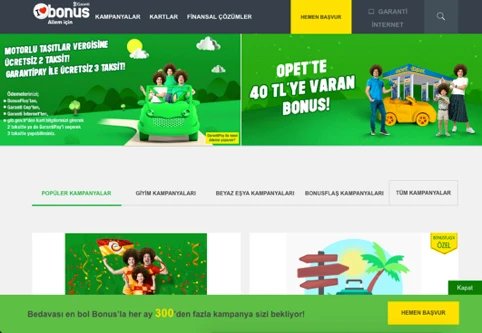
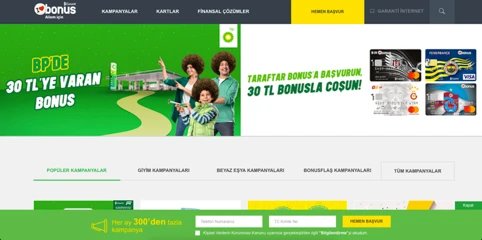
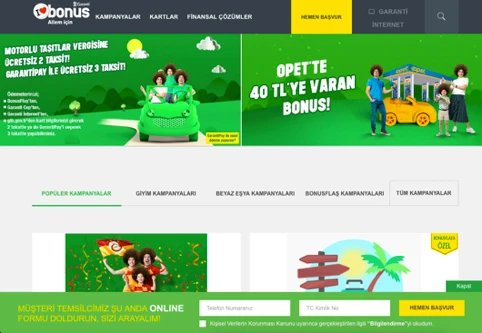
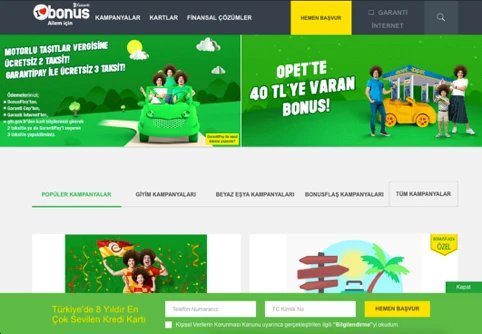
As a solution, they suggested that the application form should only ask for the most relevant information from the users. Next, they advised adding a sticky banner on the website’s landing page that showcased the merits of the Bonus Card. Also, it allowed users interested in the card to apply directly from the banner itself by providing the most relevant information. Amid the testing, Garanti Payment Systems increased Bonus Credit Card application leads by 24% by deploying its winning variation (Variation 1).
Example 3: Grene witnessed a 59.9% revenue surge with strategic marketing efforts!
Grene’s history goes back to 1915, Denmark, when they started whole-selling agricultural production items. Currently, it has become the most recognized brand of stores, with over 100 years of experience, selling spare machine parts, zootechnical products, seeds, tools, small equipment, specialist protective clothing, and agricultural toys, etc. Grene also supplies customized products that match individual requirements.
Their goal was to make it easier for users to find desired products on the mobile listing pages from the gamut of options available.
Grene ran a series of campaigns to optimize their website and improve conversions.
In the old version, the product boxes were occupying too much space on the limited mobile screen space available, and the users were finding it difficult to scroll down too much to find what they were looking for. To make product finding easier, Grene decided to optimize the use of available screen space by downsizing the space each product used to display information.
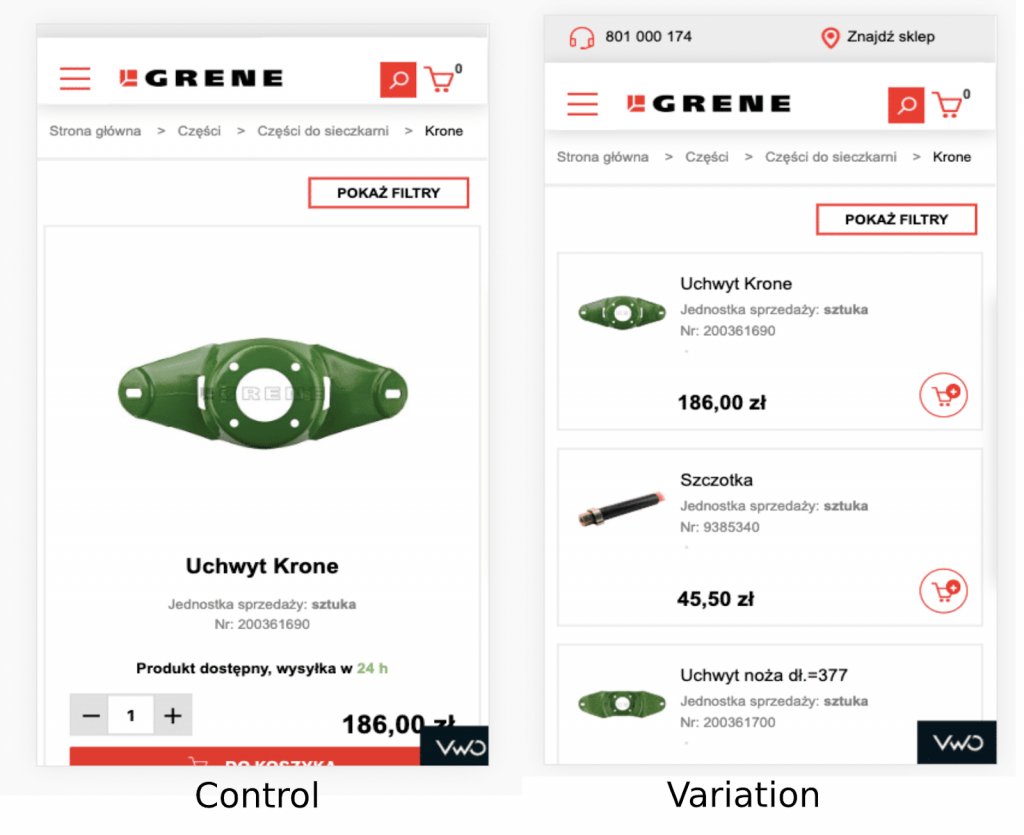
As part of the strategy, the CTA button, too, was replaced by a cart icon with a circular perimeter of red color. To depict that action is complete, (i.e., the product has been added to cart ) upon clicking changed color from red to green. The variation gave a 43.03% conversion rate against control’s conversion rate of 36.81% and a confidence level of 100%. Additionally, clicks on product boxes increased by 178, which was a 15.50% increment, and a 16.89% increase in CVR. This also resulted in a 10% increase in click-through to cart page and a 10% increase in visits to the Thank You page.
They redesigned the way the company’s USPs were displayed. The new variation had the USPs highlighted in bright, green color. Introducing green color to the icons displaying the USPs resulted in increased impressions.
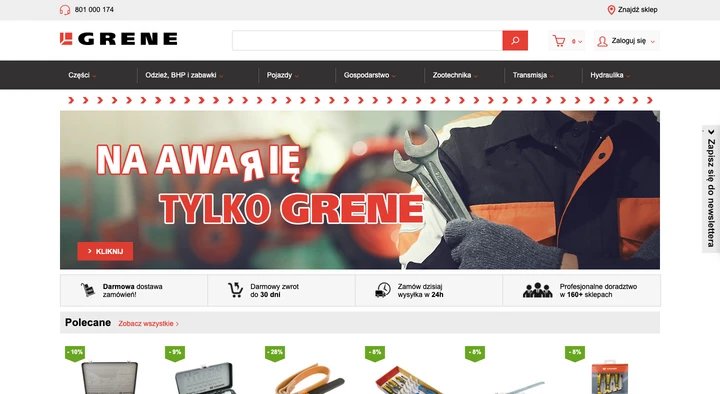
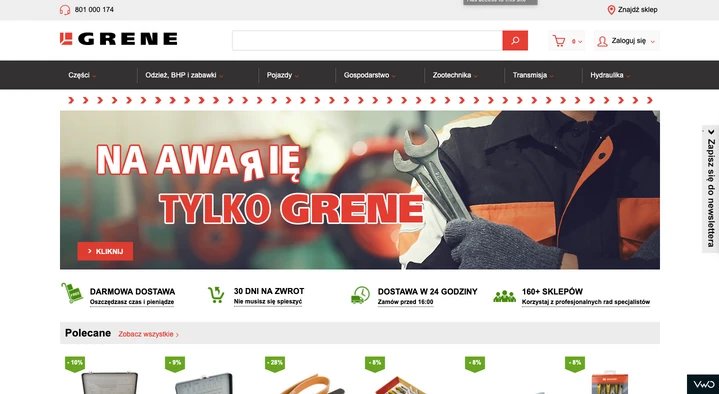
The parameters tracked were Interaction/ Clicks on the USP’s and eCommerce CVR. User interaction spiked from 0.26% in the control version to 2.28% in the variation, with a 100% confidence level. Moreover, the eCommerce CVR shot up from 2.64% to 3.18% during this time.
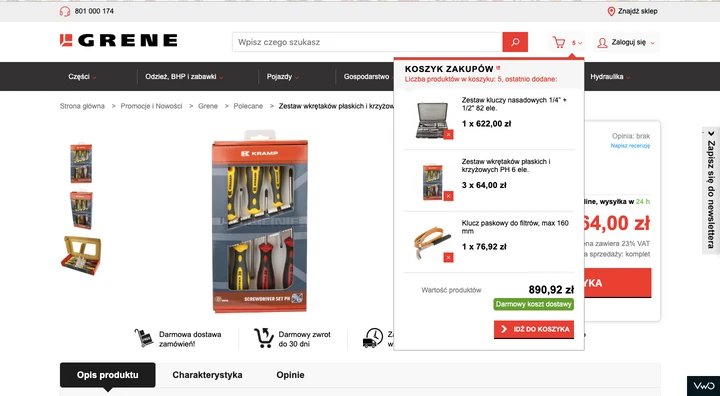
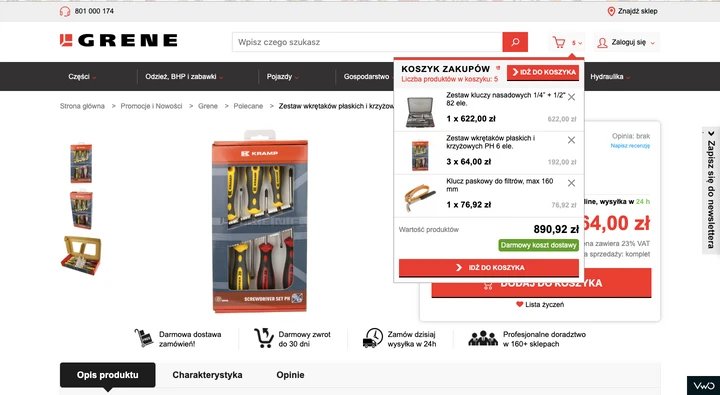
They also added a CTA button at the top of the mini cart, helping users quickly make a transition to the cart page. To avoid any unwanted clicks, they also opted for a more sorted layout with a ‘remove’ button on the right. Option to have the addition of the multiplied value of products and a bigger CTA button was also incorporated. These changes motivated users to go further down the conversion funnel and complete their journey.
Example 4: Best Choice Products (BCP) and One Click increased their conversion rates by 30%!
Best Choice Products (BCP) is a California based eCommerce company selling high quality and low priced products for home, garden, music, children, and fitness. BCP is known to provide an uncomplicated shopping experience for its customers with its diverse categories and selections of products.
While shopping online, more than 30% of e-shoppers use site search. When visitors use the search bar on a website, they know what they’re looking for. Yet, optimizing and continuously experimenting with search UI/UX is one of the most under-utilized best practices by eCommerce business owners.
Nothing is more demotivating for a visitor’s enthusiasm than a search bar that does not deliver accurate results or even worse, is not noticeably visible.
Best Choice Products noticed that more than 50% of their traffic was mobile users. On analyzing deeper into their analytics data, they realized that visitors looking for products using the search icon in the header were converting 60% higher than others.
As a solution to this issue, it was decided to create a variation with a giant search bar and place it right at the center of the website’s header, just like Amazon and other similar sites. BCP’s goal was to drive conversions by making the search bar more prominent. Improving the visibility of the search bar improved user penetration into the website. Revealing the search bar helped them get more clicks, searches, and a revenue uplift of 0.1% within a week!
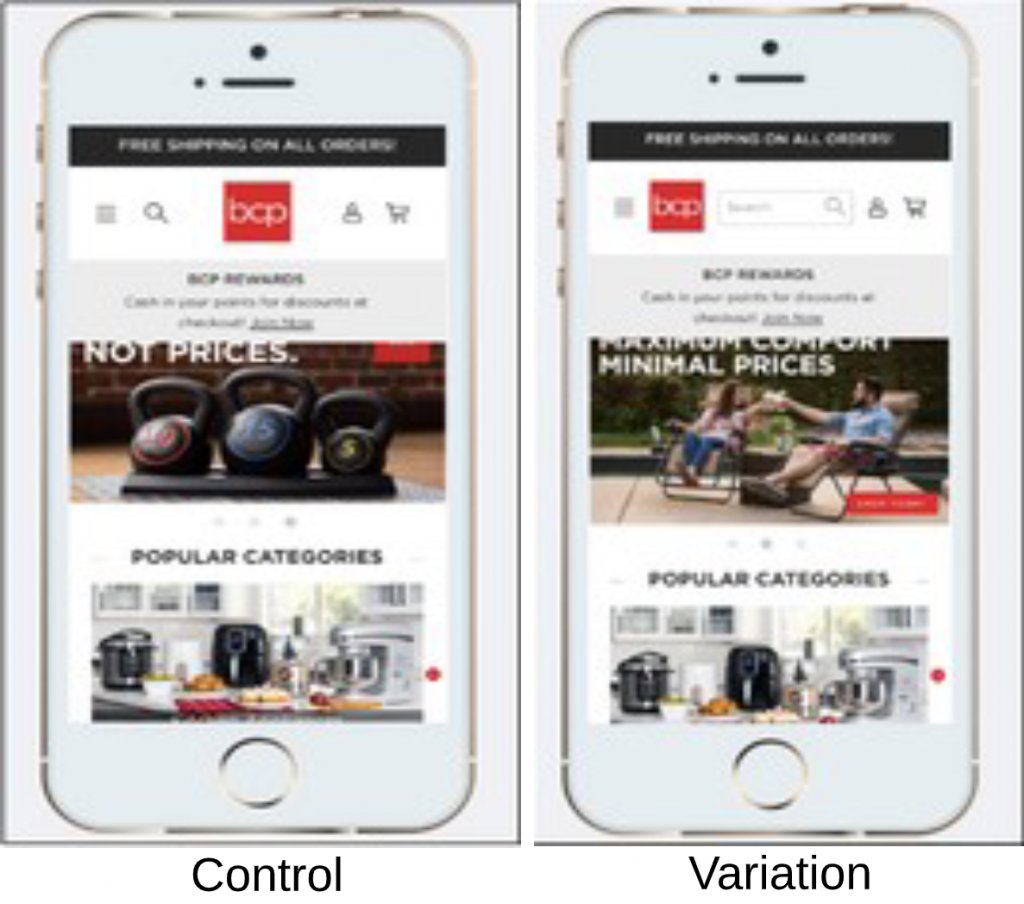
Further, they tracked conversion rates by detecting visitors that reach the post-purchase thank you page.
They went through visitor recordings to understand how users were interacting with the new search bar v/s the old. For a complete analysis, along with conversions, they also made observations based on visitor drop-offs, page sessions, time spent on each page, etc. for future experiments.
We have discussed important sources of website traffic. We extended our discussion to key channels and strategies to drive website traffic. Detailed information shared about best practices to boost website traffic will help get more traffic to your website.
It starts with SEO, social media, great content, advertising, and outreach. Use valuable analytics tools to help you figure out what type of content to put on your site and to analyze the source of traffic.
A good strategy and consistent efforts will help you achieve your objectives. The idea is to get maximum conversions and of course, you want to optimize your site for conversions.
Consistently evaluating your analytics data will help you better understand your website’s performance. You will know your website traffic better and can then accordingly adjust your marketing strategies and business objectives as necessary.
Website analytics reports provide valuable insight into a website’s strengths and weaknesses. A comprehensive report about your website’s key metrics can help you to pinpoint the areas on your website that could benefit from enhancements and minor tweaks. All the strategies discussed above will help you increase the quality and quantity of your web traffic.
Here are 10 proven methods to increase traffic on your website both organically and paid ways:
1. Perform extensive keyword research
2. Pay attention to on-page SEO
3. Create content that’s relatable and memorable
4. Write guests posts to generate backlinks, boost referral traffic, and increase SERP rankings
5. Stay active on social media sites
6. Use advertising through paid search and social media to increase website traffic
7. Promote content through email newsletters
8. Conduct influencer outreach campaigns
9. Submit press releases to influential media publications
10. Exchange backlinks with sites with good DA authority
Tracking the traffic flow on your website is one of the best and smartest ways to gauge its performance on the internet and find ways to optimize user experiences. You can keep a tab on the performance of various critical metrics such as page views, unique visitors, impressions, click-through rate, bounce rate, and so on. Here’s a handy list of the best tools to use to track website performance:
1. Google Analytics
2. Adobe Analytics
3. Matomo
4. Clicky
5. Google Search Console
6. Semrush
7. Ahref
8. SimilarWeb
There are numerous ways to improve your website’s SEO and make it rank high on SERP. Listed below are the top 10 methods for your reference:
1. Improve page load speed
2. Produce high-quality content
3. Optimize your site images
4. Add header tags to your content for better readability
5. Start blogging more often
6. Make use of outbound links
7. Consider adding multimedia elements to your content, such as videos, slideshows, audio, etc.
8. Enhance the readability of your website
9. Fix all the broken links
10. Make your site more mobile-friendly
In layman language, traffic to a website is synonymous with food for survival. Traffic ideally refers to the volume of people visiting your website and taking an interest in your brand and its content. How many people visit your website depends on your site’s performance, customer viability, easy usage, and offering exactly what visitors want.
One of the best ways to check traffic on Google is by using Google Analytics. It’s a highly intuitive Google-developed tool that allows you to gauge your website’s traffic and overall performance over a prolonged (or specific) period. If you wish to deep dive, you can even map traffic sources – check their demography, geography, devices, age group, and so on.
Log into your Google Analytics account. Navigate your way to ‘Behavior’ and click on ‘Site Content.’ There you can view the traffic sources of all of your site pages, including the landing pages, campaign pages, and exit pages.
Ideally, there are 6 primary types of website traffic sources.
1. Organic traffic
2. Paid traffic
3. Referral traffic
4. Social Traffic
5. Email traffic
6. Direct traffic
You can read in-depth about these traffic sources in the above section titled ‘Top 7 traffic sources to fuel your website.’