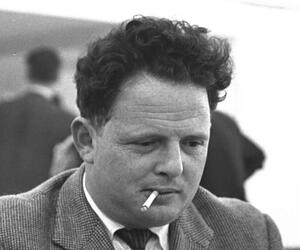
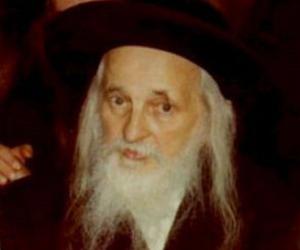
Nobel Peace Prize-winning activist Elie Wiesel is best remembered for his book Night, which relates his traumatic experience as a Jewish prisoner in the Nazi concentration camps. After surviving the Holocaust, he became a journalist and a human rights activist, and also helped in establishing the U.S. Holocaust Memorial Museum.
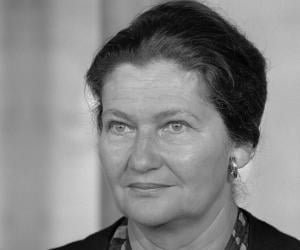
Hannah Arendt was a political theorist. Widely regarded as one of the 20th century's most prominent political thinkers, Hannah Arendt's articles and books have had a significant influence on philosophy and political theory. Her life and work inspired the 2012 biographical drama film, Hannah Arendt. Her work has also inspired several biographies written by popular authors.
A Holocaust survivor, Simone Veil had lost her father, mother, and brother to Nazi concentration camps. She grew up to be a magistrate and became the first woman president of the European Parliament. She had also been an able health minister and rallied for abortion rights of French women.
Gerda Weissmann Klein is a Polish American writer. She survived the Holocaust in which her entire family perished. Later on, she wrote an autobiographical account of the Holocaust, All but My Life, which was adapted into a short film. She and her husband became advocates of Holocaust education. She was given the Presidential Medal of Freedom in 2011.
Georges Charpak was a physicist whose invention and development of the multiwire proportional chamber earned him the prestigious Nobel Prize in Physics in 1992. He is also credited with co-founding several companies, including SuperSonic Imagine and Molecular Engines Laboratories. Over the course of his illustrious career, Georges Charpak was also honored with other awards, such as the Golden Plate Award.
Natalia Karp was a Polish pianist and Holocaust survivor. During World War II, Karp and her sister were sent to the Kraków-Płaszów concentration camp where she was ordered to play the piano by SS functionary Amon Göth on his birthday. Impressed with her performance, Göth spared her and her sister. Karp survived the war and continued playing into her 90s.
Jewish Polish-born-Canadian physician and activist Henekh Morgentaler, CM, is noted for his abortion rights advocacy and commitment to enhance healthcare for women. He is counted among the first Canadian doctors who carried out vasectomies for inserting intrauterine devices to prevent pregnancies and provided birth-control pills to unmarried women. He became the first doctor in North America who used vacuum aspiration.
The author of Five Chimneys, an autobiographical account of her time as a prisoner at Auschwitz-Birkenau, Olga Lengyel was eventually the only survivor from her family. A physician’s assistant, she later moved to the US and formed the Memorial Library there, which now raises awareness about the Holocaust.
Primo Levi was an Italian Jewish partisan, chemist, writer, and Holocaust survivor. Over the course of his career, Levi authored several books, including If This Is a Man, which narrates his experience in the Auschwitz concentration camp. The book was adapted into a stage production titled Primo in 2004. Levi's 1963 memoir titled The Truce was adapted into a film.
Serbian-born Israeli politician Yosef Lapid started his career as a print and broadcast journalist who went on to win the prestigious Sokolov Award. He then focused on politics and joined the Zionist Shinui party, before switching to the Secular Faction. He also served as Israel’s deputy prime minister and minister of justice.
Joel Teitelbaum was a Romanian philosopher and rabbi. He is credited with founding the Satmar dynasty. An important personality in the post-war renaissance of Hasidic Judaism, Teitelbaum is best remembered for adopting a strictly conservative line and rejecting modernity. He was also a fierce opponent of Zionism.