The 2nd Vice President and the 3rd President of America, Thomas Jefferson was one of the Founding Fathers of USA and the principal draftsman of the Declaration of Independence. Jefferson was a staunch advocate of democracy and a strong believer of individual rights and religious freedom, despite the fact that he himself owned nearly 600 slaves.
Known as the Queen of Rock 'n' Roll, Tina Turner was one of the best-selling recording artists of all time and had a very long and successful career. Let's Stay Together, What's Love Got to Do with It, Private Dancer and Golden Eye are some of her chartbuster songs. She was also a songwriter and had acted in films too.
One of the most celebrated actors of the 1960s and 1970s, Paul Newman was a multi-faceted man. Apart from winning acting accolades, such as the Academy Award, he had also won many championships as a driver as part of the Sports Car Club of America. Also known for his philanthropy and political activism, Newman founded many nonprofit organizations.
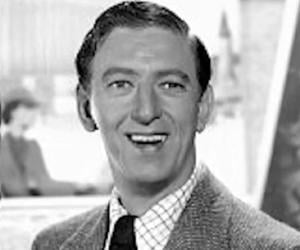
Perhaps the most loved Willy Wonka of them all, Gene Wilder was one of the main reasons for the popularity of the iconic character, which he played in the 1971 film Willy Wonka & the Chocolate Factory. Apart from acting and writing, Gene was also instrumental in promoting cancer awareness through his organization Gilda Radner Ovarian Cancer Detection Center.
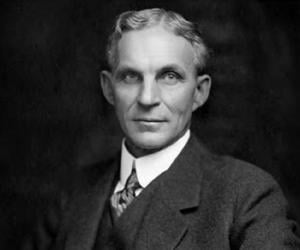
Business magnate and founder of the Ford Motor Company, Henry Ford is credited to have made the automobile an accessible conveyance for Americans in the 20th century. Following the success of his company, he became one of the richest and best-known people in the world. He also became known for his pacifism during the first years of World War I.
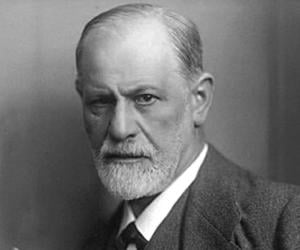
Regarded as the father of psychoanalysis, Sigmund Freud was a neurologist. Despite suffering criticism, psychoanalysis remains influential in the fields of psychology and psychiatry; such is the influence Freud has on humanities. Scholars believe that Freud is one of the most influential personalities of the 20th century and that his impact is comparable to that of Marxism and Darwinism.
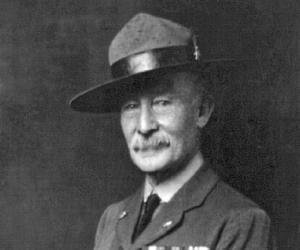
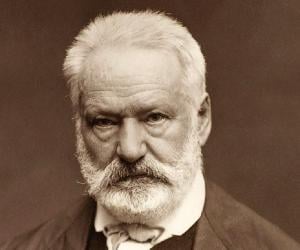
Victor Hugo was a French poet, dramatist, and novelist of the Romantic movement. Regarded as one of the best-known and greatest French writers of all time, Victor Hugo wrote abundantly during his career that spanned over six decades. Thanks to his works, such as Hernani and Cromwell, Victor Hugo was one of the leading figures of the Romantic literary movement.
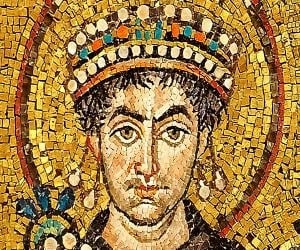
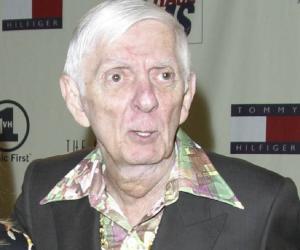
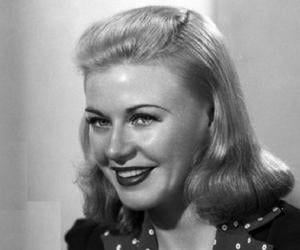
Ginger Rogers was an American actress, singer, and dancer. Often regarded as an American icon, Rogers played an important role in popularizing the Golden Age of Hollywood. After winning the Academy Award for portraying the title character in Kitty Foyle, Rogers became one of the highest-paid actresses during the 1940s. Her life inspired a musical titled Backwards in High Heels.
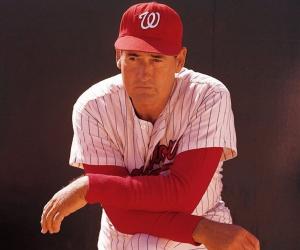
Ted Williams was an American baseball player who spent his entire 19-year MLB career with the Boston Red Sox. A nineteen-time All-Star and two-time Triple Crown winner, Ted Williams is widely considered one of the greatest hitters in the history of baseball. In 1991, he was honored with the Presidential Medal of Freedom.
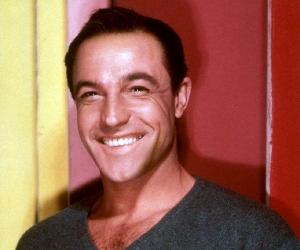
Actor, dancer, singer, and filmmaker, Gene Kelly, was one of the most popular Hollywood figures in the 1940s and 1950s. Among his other achievements, he is credited to have popularized the genre of musical films in Hollywood. As a filmmaker, he often experimented with camera techniques and special effects. He received an Academy Honorary Award in 1952.
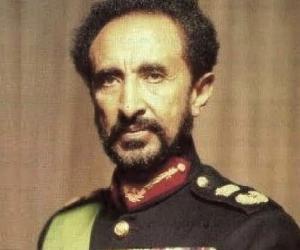
Haile Selassie, served his country, Ethiopia, as its regent from 1916 to 1930 and as its emperor from 1930 to 1974. He introduced the first Ethiopian constitution, abolished slavery, chaired the Organisation of African Unity, and helped Ethiopia enter the UN. He inspired the Rastafari movement, too.
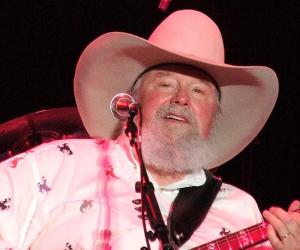
Singer, songwriter, and multi-instrumentalist, Charlie Daniels, is remembered for his contributions to Southern rock, country, and bluegrass music. He had an extensive career that spanned over half a century and was inducted into the Cheyenne Frontier Days Hall of Fame and the Country Music Hall of Fame. He had also appeared in a few films.
Darren McGavin was an American actor whose journey from being a squatter in Tacoma to becoming a popular stage, film, TV actor was quite remarkable. He started his career as a set painter for Columbia Pictures before trying his hand at acting and eventually receiving a Primetime Emmy Award nomination for his work in the sitcom TV series, Murphy Brown.
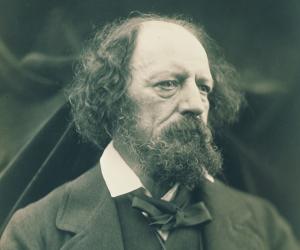
Alfred, Lord Tennyson was a British poet. One of the most famous British poets of all time, Tennyson served as the Poet Laureate during Queen Victoria's reign. His poetry, which is renowned for its powerful visual imagery, served as an important influence on the Pre-Raphaelite Brotherhood, a group of English poets and painters.
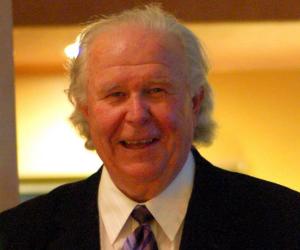
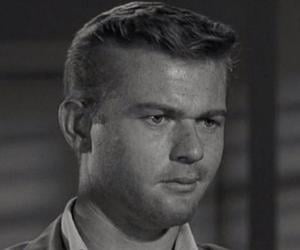
Ned Beatty was an American actor who appeared in over 160 films during an illustrious career that spanned 50 years. Over the course of his career, Ned Beatty was nominated for several prestigious awards such as the Academy Award, Emmy Award, and Golden Globe Award.
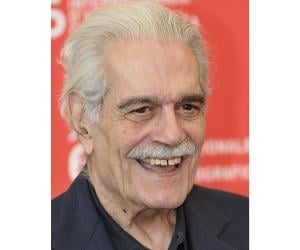
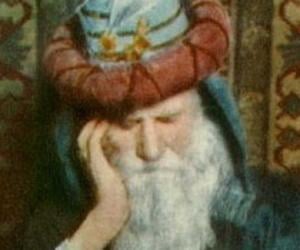
Omar Khayyam was a Persian polymath, mathematician, philosopher, astronomer, and poet. In the field of mathematics, he is best known for his work on the classification and solution of cubic equations. As an astronomer, he designed a solar calendar known as the Jalali calendar. His philosophical attitude towards life had elements of pessimism, nihilism, Epicureanism, and fatalism.
Samuel Beckett was a legendary Nobel Prize-winning Irish postmodernist and minimalist playwright and author, regarded as a prominent figure of the "Theatre of the Absurd.” He is best known for the play Waiting for Godot and for his tragi-comic themes and black comedy. He was also the Saoi of Aosdána.
Fred MacMurray was an American actor who appeared in over 100 films in a career that spanned almost 50 years. He is best remembered for appearing in many Disney films and became the first person to be named a Disney Legend in 1987. Fred MacMurray was also honored with a star on the Hollywood Walk of Fame.
American actor and martial artist, John Saxon was best known for the film Enter the Dragon where he co-starred with the legendary Bruce Lee. The famous character actor of Western and horror films, in his extensive career spanning six decades, worked in more than 200 films and television shows including three Nightmare on Elm Street movies, The Appaloosa and Dynasty.
One of the Founding Fathers of the United States who signed the famous Paris Treaty, John Jay was best known as the first Chief Justice of the US Supreme Court, although he occupied various other important public positions. He was a diplomat, who shaped his country’s foreign policy. He passed legislation to gradually abolish slavery, but he himself owned five enslaved people.
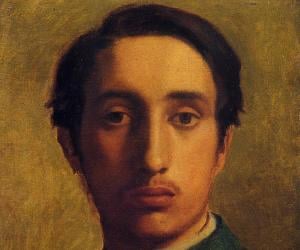
French Impressionist artist Edgar Degas is best remembered for his oil paintings and pastel drawings and for his signature use of dancers and bathing women as themes in his works such as Fin d'Arabesque and Woman in a Tub. He had also experimented with bronze sculptures and called himself a realist.
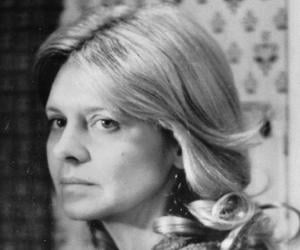
Melinda Dillon is an American actress whose performance in Who's Afraid of Virginia Woolf?, which marked her Broadway debut, earned her a Tony Award nomination in 1963. She then went on to earn two Academy Award nominations for delivering powerful performances in Close Encounters of the Third Kind and Absence of Malice.
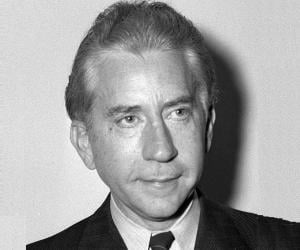
As the patriarch of the Getty family, J. Paul Getty was an influential petrol-industrialist who founded the Getty Oil Company. In 1966, Paul made it to the Guinness Book of Records as the world's richest private citizen. An avid collector of antiquities and art, his collection is preserved at the J. Paul Getty Museum in California.
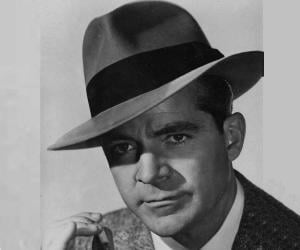
Dana Andrews was an American actor who achieved popularity during the 1940s. His film career declined in the 1950s, partly due to alcoholism, which he eventually overcame by working with the National Council on Alcoholism and Drug Dependence. Later in his life, he started focusing on his real estate business. He died of pneumonia and congestive heart failure in 1992.
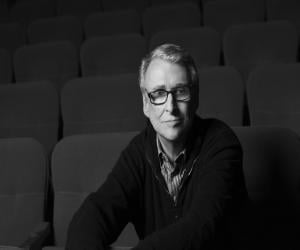
Mike Nichols started as a comedian with the troupe The Compass Players and then performed as part of the Grammy-winning duo Nichols and May. Nichols then delivered Tony-winning directorial stage ventures such as Luv and Death of a Salesman and won the Academy Award for his direction in The Graduate.
Also known as Justinian the Great, Justinian I was the Eastern Roman emperor from 527 to 565. Even though he came from a peasant family, he was well educated in jurisprudence, theology, and Roman history. As emperor, he was known to be highly energetic and ambitious. He brought about several judicial reforms in his kingdom.
American mathematician and aerospace engineer Mary Jackson went down in history as the first African-American woman to work as a NASA engineer. Initially a math teacher, she later joined NACA under Dorothy Vaughan and contributed to countless American space programs at a time when racial segregation was the norm.
J. J. Thomson was a British physicist credited with the discovery of the electron, the first subatomic particle to be discovered. He was awarded the Nobel Prize in Physics in 1906 for his work on the conduction of electricity in gases. In 1884, he was appointed Cavendish Professor of Physics at the University of Cambridge.