The 34th president of the United States, Dwight D. Eisenhower held office from 1953 to 1961. An army officer During World War II, he was part of many successful operations. He signed the Civil Rights Act of 1957, and his two terms as president saw widespread economic prosperity in USA. He is ranked high among American presidents.
An actor, singer, and comedian, Dean Martin earned the nickname The King of Cool for his effortless self-assurance and charisma. One of the most popular entertainers of the 1940s, 1950s, and 1960s, Dean performed in nightclubs and concert stages and appeared in film and TV productions. Such is his popularity that his songs continue to be featured across popular culture.
Andrew Jackson was the 7th President of USA. His presidential reign has been termed as Jacksonian democracy and witnessed the shift of political power from established elites to ordinary voters. Coming from humble beginnings, Jackson knew the struggle of the masses and thus, worked towards creating a more inclusive country. His picture has been featured on the front side of $20 bill since 1928.
Feminist and civil rights icon Eleanor Roosevelt, wife of President Franklin D. Roosevelt, was the longest-serving U.S First Lady. She was a prominent human rights activist, wrote columns, and hosted a radio show. She was named to Gallup's List of Most Widely Admired People of the 20th Century in 1999.
Also known as the Emperor Shizu of Yuan, Kublai Khan served as the fifth khagan of the famous Mongol Empire. After the division of the empire, Kublai Khan founded the Yuan dynasty in China and ruled as the first Yuan emperor from 1271 until his death in 1294. Hence, he played an important role in re-creating a militarily powerful China.
The American civil rights activist was an ideal foil for her famous husband Martin Luther King Jr. in promoting racial equality. The author and singer led the Women's Movement and fought for the rights of the LGBT community. She was also known for mobilising African-Americans during the 1960 US presidential election. She founded the King Centre, a not-for-profit organization.
An Indian lawyer and anti-colonial nationalist, Mahatma Gandhi was a major figure in India’s fight for independence from British rule. He is renowned for his employment of non-violent resistance and civil disobedience methods. Despite his popularity, he had numerous detractors as well and was assassinated in 1948. He is widely considered the Father of the Nation in India.
Ralph Waldo Emerson was an American philosopher who led the transcendentalist movement that developed in the eastern United States in the 1820s and 1830s. He is credited with popularizing individualism through his numerous lectures and essays. Emerson influenced many thinkers and writers that followed him; he mentored Henry David Thoreau, who went on to become a leading transcendentalist.
American filmmaker David Lynch is widely regarded as one of the most influential and accomplished directors of the modern era. Eraserhead, The Elephant Man, Blue Velvet, Wild at Heart, The Straight Story, Lost Highway, Mulholland Drive and Inland Empire are some of his acclaimed films. He was given an honorary Oscar in 2019. He is also a painter and a musician.
A prominent actor who was active in the entertainment industry for five decades, Robert Forster was known for his versatility. As a college student, he initially planned to study law but eventually changed his mind and ventured into acting. Dedicated to his profession with a passion, he continued working even after being diagnosed with cancer.
James Herriot was a British writer and veterinary surgeon. Many of his books about animals and veterinary practice inspired several films and television series, including the 1975 British movie All Creatures Great and Small. His early life inspired BBC's drama Young James Herriot. In 1994, Glasgow Veterinary College's library was named James Herriot Library in his honor.
Roy Oliver Disney, older brother of Walt Disney, co-founded The Walt Disney Company and was its first CEO. He had also served in the U.S. Navy and had been a banker. He postponed his retirement plans following the death of Walt Disney and supervised the completion of Walt Disney World.
Mario Puzo is remembered for his iconic crime novels, most notably the New York Times bestseller The Godfather, which was later turned into a movie trilogy by Francis Ford Coppola and won Puzo two Academy Awards for the best screenplay. Puzo also wrote the screenplay for Richard Donner's Superman.
French artist Pierre-Auguste Renoir, father of actor Pierre Renoir and director Jean Renoir, was a key Impressionist painter. His best-known works include The Swing, Diana, and Seated Girl. He was known for his use of vibrant colors and feminine sensuality in his works. He also painted landscapes and portraits.
One of the Seven Wise Men of Greece, Thales was a 6th-century mathematician who believed that the Earth was a flat disk floating on a huge ocean. Legend has it that he had predicted a solar eclipse that stopped a major battle and had also laid down several geometrical theorems.
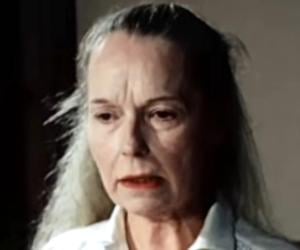
Martin D. Ginsburg was one of the most successful tax attorneys and the husband of U.S Supreme Court Justice Ruth Bader Ginsburg. Apart from serving as a lawyer, Martin also taught at several prestigious law schools, such as New York University Law School, Columbia Law School, and Harvard Law School. After representing business magnate Ross Perot in a case, the two became good friends.
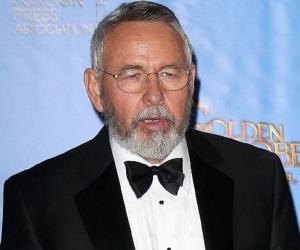
Yvonne Craig was an American actress best known for her portrayal of Batgirl in the iconic 1960s TV series Batman. Such was her popularity that she was called a pioneer of female superheroes during the 1960s. Also remembered for her skills as a ballet dancer, Yvonne Craig's training as a ballerina helped her a lot while performing stunts in Batman.
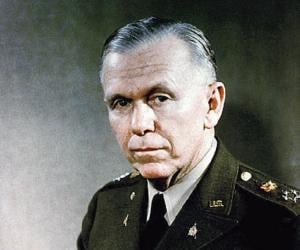
George Marshall was an American statesman and soldier who played a key role in the Allied victory during the Second World War. Marshall served as the third US Secretary of Defense from 1950 to 1951. As Secretary of State, George Marshall advocated economic recovery programs to aid post-war European countries, for which he was honored with the Nobel Peace Prize.
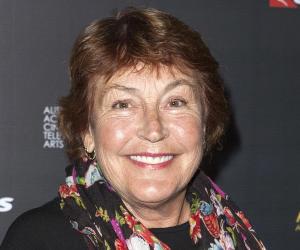
Australia-born singer-songwriter Helen Maxine Reddy moved to the USA when she won a ticket to New York City, eventually remaining there, struggling to establish herself until she got her first hit, I Don’t Know How to Love Him. However, her best remembered song was I Am Woman, which went on to become a feminist anthem, making her an international star.
Marianne Faithfull is an English singer, actress, and songwriter. Faithfull emerged as one of the most prominent female music artists during the 1960s when the United States was happily embracing the British Invasion. However, her professional achievements were overshadowed by heroin addiction, homelessness, and an eating disorder in the 1970s. Nevertheless, Marianne Faithfull staged a comeback and became successful.
Sarah Bernhardt was a French actress known for playing important roles in popular French plays of the early-20th century. Her decision to play Hamlet inspired Theresa Rebeck's play Bernhardt/Hamlet, in which Janet McTeer portrayed Sarah Bernhardt. In 1960, Bernhardt became the earliest born person to be honored with a star on the Hollywood Walk of Fame.
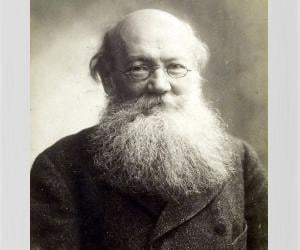
Russian philosopher Peter Kropotkin was a passionate advocate of anarcho-communism. He was also an activist, revolutionary, economist, and sociologist. He was arrested and imprisoned for his activism in 1874. However, he managed to escape and lived in exile for over 40 years in different countries across Europe. He returned to Russia after the Russian Revolution in 1917.
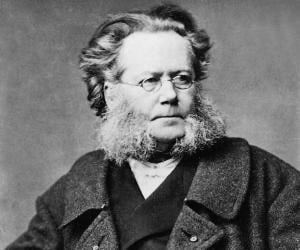
Henrik Ibsen was a Norwegian theatre director and playwright. One of the most influential and popular playwrights of his generation, Ibsen is credited with co-founding modernism in theatre, for which he is often called the father of realism. After William Shakespeare, Henrik Ibsen is the world's most often performed dramatist. His works have influenced other playwrights like George Bernard Shaw.
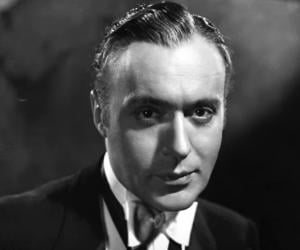
French-American actor Charles Boyer appeared in more than 80 films in a career that spanned over half a century. He pursued a theatrical career as a young man and eventually moved into films. He achieved extreme popularity with his roles in romantic movies like The Garden of Allah and Love Affair in the 1930s. He received four Academy Award nominations.