Public Welfare Medal-winning astrophysicist and academic Neil deGrasse Tyson hosted shows such as NOVA ScienceNow, Cosmos: A Spacetime Odyssey, and Star Talk. He is the director of Hayden Planetarium and contributed to the dismissal of Pluto’s status as the ninth planet. He has also written a monthly column as "Merlin.”
Neurosurgeon Ben Carson is credited with many pioneering neurosurgical procedures. He became a Library of Congress “Living Legend” and received the Presidential Medal of Freedom. He later contested in the 2016 presidential primaries, has authored numerous books, was a Secretary of Housing and Urban Development, and earned 60 honorary doctorates.
Former NASA astronaut Mae Jemison became the first Black woman to fly into space, as a mission specialist on the Space Shuttle Endeavour. A qualified physician, she has served as a Peace Corps doctor, too. She has written several books and established a non-profit and a tech research organization.
A doctorate in physics from MIT Cambridge, Ronald McNair worked on chemical lasers before joining NASA and in 1984 flew as a mission specialist on STS-41-B aboard Challenger, becoming the second African-American to do so. In January 1986, he was selected to fly on STS-51-L, but was killed along with rest of the crews when Challenger disintegrated soon after liftoff.
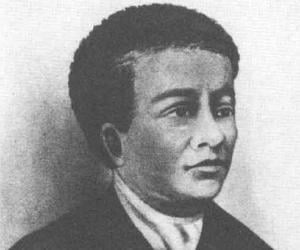
Benjamin Banneker was born to a free African-American mother and a former slave father, and was largely self-educated. While he showed immense talent in both mathematics and astronomy, having predicted a solar eclipse with precision, he also wrote essays on civil rights and rallied against slavery.
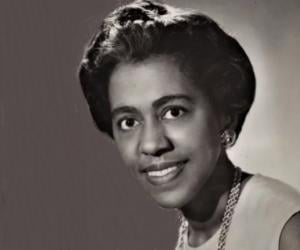
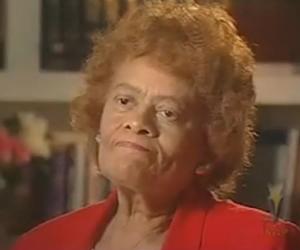
Marie Maynard Daly was the first Black lady to earn a doctoral degree in chemistry in the U.S. She was inspired by her father, who had to drop out of Cornell due to lack of funds. A pioneer of biochemistry, Daly later introduced a scholarship for African-American students at Queens College.
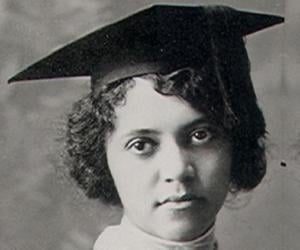
Alice Ball was an American chemist best remembered for developing the Ball Method, which became the most effective treatment for leprosy in the early 20th century. She was the first African American and first woman to work as a chemistry professor at the University of Hawaii. Alice Ball's contributions to science were recognized several years after her death.
Avery August is a Belizean-born American scientist best known for his work in the field of immunology and T cells. In 2016, he was honored with the Ruth Kirschstein Diversity in Science award for his contributions to the field of molecular biology and biochemistry. Avery August is currently working as a professor of immunology at Cornell University.